




































































In Memoriam
Roger Dicken (1939-2024)
Roger Dicken, the Oscar-nominated British special effects artist, sculptor and model maker known for his work on ALIEN and WHEN DINOSAURS RULED THE EARTH, has died. He was 84.
Dicken died Feb. 18 at his home in North Wales, Mick Cooper, a friend of more than five decades, told THE HOLLYWOOD REPORTER.
On his first film, Dicken was a member of the effects team for Stanley Kubrick’s 2001: A SPACE ODYSSEY (1968); later, he created and operated the dinosaur puppets seen in THE LAND THAT TIME FORGOT (1974).
Dicken sculpted several prehistoric creatures — plus a pair of full-sized pterodactyl feet — for the stop-motion adventure tale WHEN DINOSAURS RULED THE EARTH (1970), written and directed by Val Guest for Hammer Films. He and American animator Jim Danforth shared the Oscar nomination for visual effects.
For Ridley Scott’s ALIEN (1979), Dicken constructed and controlled the terrifying chest-bursting creature that kills Executive Officer Kane (John Hurt) in the film’s most iconic scene.
“I got underneath the set with my activated hand-operated alien, and it was this, of course, that ended up appearing revoltingly through his body and pausing momentarily to twitch and breath, etc., before zipping off the table,” Dicken recalled in a 1992 interview.
“Two assistants, holding simple squeeze bubbles fixed to plastic tubes, made the small sacs in the body pulsate, etc. The monster’s exit was accomplished by pulling me along under the table, laying on a trolley with my arm holding the puppet, working it through a slot as it knocked off strategically placed utensils in the process of disappearing.”
Five people shared the visual effects Oscar for their work on the film; Dicken was not one of them.
Born on April 15, 1939, in Portsmouth, Hampshire, England, Roger Maxwell Dicken said he loved the “old gorilla suits in the 1940s films. I always wanted to make one of these but only got as far as creating an overhead ape mask with fur and papier-maché with which I scared the life out of a couple of local girls returning home from a dance late at night.”
He and friends came up with a comedy/horror routine for clubs in which he played Doctor Lugani, a master of “cemeteries” who introduces such characters as The Hunchback, Dracula and The Wolf Man.
“I would do a quick change toward the end and play the Frankenstein monster, which went down very well in those days, carrying off a girl planted in the audience to finish off the show,” he recalled.
A meeting with VFX legend Ray Harryhausen inspired him to try the movies, and he landed jobs with the BBC and made models for the THUNDERBIRDS TV show before going freelance to join the team on 2001.
Dicken then created the moth monster for THE BLOOD BEAST TERROR (1968), starring Peter Cushing, and worked on WITCHFINDER GENERAL (1968), starring Vincent Price.
He also came up with bats for SCARS OF DRACULA (1970) and octopuses for WARLORDS OF THE DEEP (1978) and wrapped his career with WHITE DOG (1982) and THE HUNGER (1983).
Survivors include his wife, Wendy.
Taken from THE HOLLYWOOD REPORTER
Dan Goozee (1943-2024)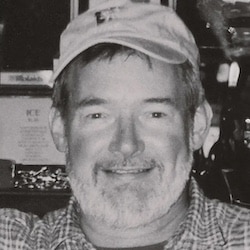
Dan Goozee, the acclaimed artist who created posters for such films as CLASH OF THE TITANS, SUPERMAN IV and the James Bond movies MOONRAKER, OCTOPUSSY and A VIEW TO A KILL, has died. He was 80.
Goozee died April 7 at West Hills Hospital & Medical Center of an age-related condition he had battled for two years, his son, Rob, told THE HOLLYWOOD REPORTER.
The unassuming Goozee spent years as a Walt Disney Imagineering theme park consultant, crafting conceptual artwork for Disneyland Paris and Tokyo DisneySea, for Splash Mountain and Big Thunder rides, for the Imagination Pavilion and Seas Pavilion at EPCOT and for the Tree of Life attraction at Animal Kingdom.
He also handled effects work for BATTLESTAR GALLACTICA (1978) and BUCK ROGERS IN THE 25TH CENTURY (1979).
Born in 1943 in Astoria, Oregon, Daniel Goozee worked on weekends at movie theaters that his father and uncle owned and operated in nearby Seaside, then graduated from the ArtCenter College of Design in Pasadena in 1965.
A year later, he landed a job in the art department at Fox and was a production illustrator on DOCTOR DOLITTLE (1967), TORA! TORA! TORA! (1970), THE POSEIDON ADVENTURE (1972) and THE TOWERING INFERNO (1974) and a set illustrator on BATTLE FOR THE PLANET OF THE APES (1973).
After working on LOGAN’S RUN (1976) and CLOSE ENCOUNTERS OF THE THIRD KIND (1977), Goozee joined Walt Disney Imagineering as a developmental/consulting artist.
For MOONRAKER (1979), OCTOPUSSY (1983) and A VIEW TO A KILL (1985), Goozee captured 007 star Roger Moore in close contact with, respectively, Lois Chiles, Maud Adams and Grace Jones.
In addition to CLASH OF THE TITANS (1981) — the final film from effects legend Ray Harryhausen — and SUPERMAN IV: THE QUEST FOR PEACE (1987), Goozee worked on posters for SMOKEY AND THE BANDIT II (1980), THE BLACK STALLION RETURNS (1983), STREETS OF FIRE (1984), CROCODILE DUNDEE (1986), THE MISSION (1986) and more. He did a lot of his posters at Seiniger & Associates.
Along the way, Goozeé was honored by the Oil Painters of America, Watercolor West and the California National Watercolor Society, among others. He produced a 19-foot mural for Robert Mondavi’s Golden Vineyard Room at Disney’s California Adventure, and his work can be seen at the Los Angeles Athletic Club and the Autry Museum of the American West.
In addition to his son, survivors include his wife, Michi; daughter-in-law Sarah; and twin grandsons Christopher and Jonathan.
“You will always be with us even as your work lives on from all things Disney, movies, fine art and more,” Rob wrote. “I’m sure you’re enjoying the views from up there. Look forward to one day seeing them with you again.”
Taken from THE HOLLYWOOD REPORTER
Tim McGovern, VES (1955-2024)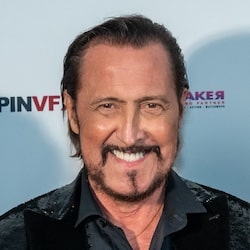
It is with a heavy heart that we share the awful news that Tim McGovern, VES Fellow, Founders Award recipient, Lifetime Member and VFX veteran who earned an Oscar for his work on 1990’s TOTAL RECALL died at 68.
His wife, Reena NeGandhi, posted the news on Facebook.
“Today is the saddest day of my life,” she wrote. “My Husband Tim McGovern, an Oscar winner for the VFX in 1990 for TOTAL RECALL and several more awards from the VES has died today. He passed away in his sleep.”
A digital effects pioneer, McGovern was a Visual Effects Society Board member for nearly two decades. He served as Vice Chair as well as founding Co-Chair of the VES Awards Committee. In October, McGovern received the VES Founders Award and was bestowed Lifetime Membership in the Society.
“We were saddened and shocked by the sudden news of Tim’s untimely passing,” said VES Chair Kim Davidson. “Tim and I have been VES members and colleagues for many years, and his passion and loyalty to the Society were exemplary. Tim’s insights, expertise and volunteer leadership have been key to our global expansion, and he will be terribly missed by us all.”
“On behalf of our entire global community, the Visual Effects Society extends our deep condolences to the family and friends of Tim McGovern, VES. Tim was a devoted, venerated and dynamic member of the Society. His enormous contributions made an indelible mark on our Society and our industry, and we are grateful for our time together.” said VES Executive Director Nancy Ward.
McGovern has numerous film credits on his resume, starting with 1982’s TRON, which he worked on while employed with the former Robert Abel and Associates.
He went on to become a founding member of Sony Pictures Imageworks, where he worked on such movies as 2015’s MISSION: IMPOSSIBLE – ROGUE NATION, 2017’s DUNKIRK, 2018’s ANT-MAN AND THE WASP, 2019’s MEN IN BLACK: INTERNATIONAL and 2021’s JUNGLE CRUISE.
Other credits include 1993’s LAST ACTION HERO, SO I MARRIED AN AXE MURDERER and LOOK WHO’S TALKING NOW; 1997’s AS GOOD AS IT GETS; and 2023’s SHAZAM! FURY OF THE GODS.
More recently, he worked at DNeg Mumbai and served as Chief Creative Officer at Whisper Pictures, a company that develops and produces animated family films.
In 1991, McGovern was bestowed with a special achievement Oscar for his work on TOTAL RECALL. He also won multiple Clio Awards throughout his career and was a member of the Academy’s Visual Effects Branch Executive Committee.
According to his bio on IMDb.com, McGovern was born on June 24, 1955, in Chicago. He attended the University of Illinois at Chicago, double majoring in photography and graphic design, in the late ’70s. He earned a doctorate from the Academy of Art University in San Francisco in 2001.
In her post, NeGandhi said that McGovern had written a film and novel that she plans to “take over to get it made for him.”
“He had so many life dreams for his film and now he’s gone,” she wrote. “He’s left it in my hands to make it happen now. I have no idea how I will live without him. He took such good care of me and he was my world. May his soul rest in peace.”
Compiled from VARIETY
Eli Noyes (1942-2024)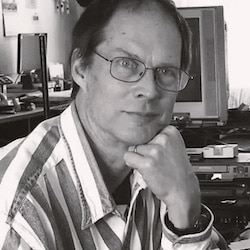
Eli Noyes, the Oscar-nominated animator who revolutionized stop-motion filmmaking with his innovative use of clay and sand, has died. He was 81.
Noyes died Saturday of complications from prostate cancer at his home in San Francisco, TOY STORY producer Ralph Guggenheim told The Hollywood Reporter. The two formed Alligator Planet in 2003 to create film, print and media works.
As an undergraduate student at Harvard University, Noyes received his Oscar nomination for his 8-minute animated film CLAY OR THE ORIGIN OF THE SPECIES (1965), which established clay stop animation as a genre and would influence the work of WALLACE AND GROMIT creators Peter Lord and David Sproxton.
For two other short films, he employed sand animation for SANDMAN (1973) and pixelated stop motion for PEANUT BUTTER AND JELLY (1976).
Noyes later shaped the look and spirit of children’s programming in the early days of cable TV, especially for Nickelodeon. The rebranded network’s first show, Pinwheel, featured his animated pinwheels made with sand.
In 1983, he and animation producer Kit Laybourne launched Noyes & Laybourne Enterprises, an independent studio located in Soho in New York City. Their company contributed playful network IDs to Nickelodeon and Nick at Nite while creating animation for such shows as EUREEKA’S CASTLE and GULLAH GULLAG ISLAND.
And for MTV, they produced network graphics and animation for Liquid Television, a showcase series that launched Mike Judge’s BEAVIS AND BUTT-HEAD and Peter Chung’s Aeon Flux.
Eliot Fette Noyes Jr. was born on Oct. 18, 1942, in Amherst, Massachusetts. His parents were modernist architect Eliot Noyes (one of the “Harvard Five”) and interior designer Molly Duncan Weed.
After leaving college, he and Claudia Weil co-directed (non-animated) documentaries, including two in 1970: THIS IS THE HOME OF MRS. LEVANT GRAHAM, a cinema verité look at a Black family’s life in a slum apartment in Washington, D.C., and ASPEN: 1970, which revolved around a generational clash of architects.
In 1988, Noyes and Laybourne joined Colossal Pictures, known for its special effects and animation techniques. Noyes created RUFF’S BONE, a groundbreaking interactive CD-ROM product for Broderbund Software, at Colossal in 1994.
Noyes and his family had moved to San Francisco in 1991, and he would work on interactive projects at Pixar and with Disney Channel and Imagineers programmers to create Zoog Disney, an afternoon programming block for kids that combined TV and the internet.
He then brought that experience to the so-called “convergence network” Oxygen as creative director in the late 1990s. (Kit Laybourne’s wife, Geraldine Laybourne, co-created Oxygen Media.)
At Alligator Planet, Noyes was animation director on the Oscar-nominated documentary THE MOST DANGEROUS MAN IN AMERICA: DANIEL ELLSBERG AND THE PENTAGON PAPERS (2009). And his “Go Green” stamps for the U.S. Postal Service, created in 2011, featured simple actions everyone can take to conserve natural resources and promote the health of the environment.
Survivors include his wife, Augusta; children Isaac and Abigail; and granddaughter Esme. Donations in his memory can be made to International Rivers or the Coalition of Natives and Allies.
Taken from THE HOLLYWOOD REPORTER
David Barrington Holt (1945-2024)
David Barrington Holt died on March 13, 2024 of complications arising from cancer. Born in England in June of 1945, David was a man of many talents and experiences. He was an expert in practical and creative matters, and his professional life spanned multiple careers: restoration of English country homes, making of museum-quality models and miniatures, production management, fashion, and psychotherapy.
David received his BA in Industrial Design with honors from London’s University of the Arts in 1963. Even in the early stages of his career, his talents were recognized; he was courted by both London’s Royal College of Art and British Rail, among others.
Over the next 20 years he built a reputation as a designer, photographer, modelmaker, and restorer of mechanical antiquities. His clients included the London Science Museum, the Greater London Council, the Institute of Mechanical Engineers, and numerous other businesses and private individuals both in England and abroad. In 1984 he founded Hero Models, which supplied models, miniatures, and hero effects for the TV, film, and commercial industries; one such project including re-creating the fly-past of the spacecraft GIOTTO and Halley’s comet for the film CHILDREN OF THE DUST.
Among many other careers, David owned and operated his own clothing boutique in London during the ‘60s; at the time he worked alongside noted fashionista Thea Porter. In the late ‘80s, he returned to school to become certified as a psychological therapist and ran a successful practice until he was scouted by the Jim Henson Company. Even while devoting considerable time to his psychotherapy education, he never stopped making; he was even commissioned by the London Science Museum to construct an operating model of a Thames Flood Barrier pier, which remains on display to this day. It was during this time he met and married his wife.
In 1986 he began a 23-year collaboration with the Jim Henson Company, first in the UK as Deputy Supervisor of the Creature Shop before moving up to Creative Supervisor. In 1993 he made the move to Los Angeles to establish and operate the Henson company’s first west-coast Creature Shop for the purpose of producing Disney’s television show DINOSAURS. David had creative oversight of shop operations including puppetry; animatronics; effects for feature films, television, and commercials; performers; administrative matters; and R&D, with developments in the field of real-time 3D CG animation. He was instrumental in development of the ground-breaking Henson Performance Control System, which allowed a single performer to operate complex, computer-driven puppets in the same manner as though they were physical. His credits include GEORGE OF THE JUNGLE, THE PHANTOM, INDIAN IN THE CUPBOARD, DR. DOLITTLE, JACK FROST, SCOOBY-DOO, SNOW DOGS, STUART LITTLE II, CATS AND DOGS, and THE COUNTRY BEARS.
Following his decades with the Henson Company, David spent three years consulting for Walt Disney Imagineering R&D, where he assisted in the technical transfer of innovative animatronic characters into public exhibits.
David spent the remainder of his extensive and varied career working and consulting for companies, including the Chiodo Brothers, Insudung Media, 11:11 Creative, and Reisman Models.
Although David was deeply conversant in computer technology and its applications for design, creation, and production, he was, at heart, a maker. He could design and build an animatronic rabbit that you would swear would take a carrot right out of your hand or a model train that, if you were much smaller, you could board and ride to the adventure of a lifetime.
David was an intelligent, talented, generous, creative, and charming person who was wickedly funny and always kind. He genuinely cared about how you were doing and never failed to stop and listen. A true Renaissance man, he will be greatly missed by all who knew him. He is survived by his wife and son.
Mathew Sweeney (1948-2024)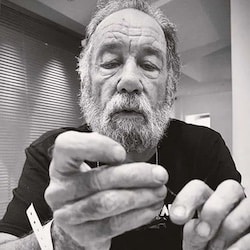
Matt Sweeney, the inventor and special effects artist who received the BAFTA Award and an Oscar nomination for his work on APOLLO 13 and also won three (3) Technical Achievement Academy Awards during his long career, has died. He was 75, and had been a member of the VES for 20 years.
Sweeney died Monday at Providence Saint Joseph Medical Center in Burbank after a long battle with lung cancer, Dave Burle, who worked alongside Sweeney at his company for many years, told THE HOLLYWOOD REPORTER.
Sweeney also handled effects for films in the LETHAL WEAPON and FAST & FURIOUS franchise and for 1941 (1979), 9 TO 5 (1980), ON GOLDEN POND (1981), GOONIES (1985), THE COLOR PURPLE (1985), THE LOST BOYS (1987), BIG TOP PEE-WEE (1988), ARACHNOPHOBIA (1990), NATURAL BORN KILLERS (1994) and GALAXY QUEST (1999), among many other movies.
Sweeney won his Technical Achievement Awards in 1987 for an Automatic Capsule Gun, which simulates bullet hits and is known as the “Sweeney Gun”; in 1998 for a Liquid Synthetic Air system, which mixes liquid nitrogen and liquid oxygen to produce safe, breathable fog; and in 2002 for the Mic Rig, an auto carrier and camera platform for shooting car chases.
He shared his Oscar nom for best visual effects on Ron Howard’s APOLLO 13 (1995) with Robert Legato, Michael Kanfer and Leslie Ekker and his Technical Achievement honors with Lucinda “Lulu” Strub (his late wife), Bob Stoker and Mic Rodgers, respectively.
Born in April 1948 and raised in Studio City, Sweeney and Strub, who was also a VES member, died in 2014, launched Matt Sweeney Special Effects Inc. in 1984 in Van Nuys to build those bullet-hit capsule guns.
The company expanded its line of products to include rigging equipment, stunt flying suits, pyrotechnic devices, glass breakers and devices for industrial use before merging with Roger George Special Effects at the start of this year.
Sweeney married fellow special effects artist Lucinda Foy about four years ago, and she survives him, as does his beloved dog, Xena.
Cary Phillips, director of R&D at ILM, worked with Sweeney on the Academy’s Scientific and Technical Awards Committee for the past several years and called him “an old school special effects guy without much experience with computer graphics.”
“But he was always open to new things, always insightful and wise and a warm and generous craftsman full of great stories for the new folks.”
Taken from THE HOLLYWOOD REPORTER
Daniel Langlois (1957-2023)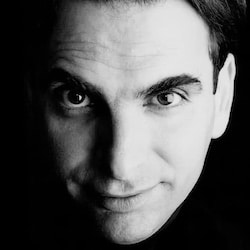
Daniel Langlois was born in Quebec, Canada in 1957 and is the founder of SOFTIMAGE, the Daniel Langlois Foundation, and Coulibri Ridge.
Daniel Langlois founded SOFTIMAGE in 1986 and served as its President and Chief Technology Officer from its inception until July 1998; the company is recognized internationally in the fields of cinema and media creation for its advanced digital technologies and especially its 3D computer animation techniques. SOFTIMAGE software is used to create the dazzling 3D effects in many blockbuster movies such as JURASSIC PARK, TITANIC, MEN IN BLACK, THE MATRIX, THE FIFTH ELEMENT, MOULIN ROUGE, HAPPY FEET, THE LORD OF THE RINGS, HARRY POTTER and PIRATES OF THE CARIBBEAN as well as numerous 3D video games.
In 1992 SOFTIMAGE went public on the American stock market NASDAQ. Two years later, with the objective of expanding the access and availability of 3D computer animation technologies, Mr. Langlois negotiated a merger agreement between SOFTIMAGE and Microsoft which became a milestone that triggered a global consolidation of the computer graphics software industry. SOFTIMAGE was later acquired by Avid in 1998 which then sold the SOFTIMAGE 3D software division to Autodesk in 2008.
Daniel Langlois holds a Bachelor’s Degree in Design from the Université du Québec à Montréal (UQAM). Before founding SOFTIMAGE, he worked for eight years as an Animation director for private companies and for the National Film Board of Canada, during which time he made significant contributions to the film industry and the field of computer graphics. He gained recognition worldwide as Co-Director of the groundbreaking computer animated film TONY DE PELTRIE (1985) and for his work on the first stereoscopic 3D computer animation in IMAX format, presented at Expo 86 in Vancouver.
Daniel Langlois has received many significant honors throughout his career. In 1994, Ernst & Young chose him as Canada’s National Entrepreneur of the Year. In 1997, he received a Scientific and Technical Oscar from the Academy of Motion Picture Arts and Sciences. In 1999, he was appointed Knight of the National Order of Québec and named Officer of the Order of Canada the following year during which he also was named Personnalité Arts-Affaires of the city of Montreal. In 2003, he was awarded the Octas Prize as a Great Pioneer in Information and Communications Technologies (ITC) for the integration of advanced digital technologies in film and media creation.
Daniel Langlois has received Honorary Doctorates from Université de Sherbrooke, McGill University, Concordia University, Université du Québec à Montréal and Ottawa University in recognition of his work in the fields of art, science and technology.
The Daniel Langlois Foundation is a private, philanthropic charitable organization created in 1997. The purpose of the Foundation is to further artistic and scientific knowledge by fostering the meeting of art and science in the fields of technology. The Foundation seeks to nurture a critical awareness of technology’s implications for human beings and their natural and cultural environment as well as to explore the characteristic aesthetics of new human environments. The foundation has granted funding to numerous projects worldwide and the foundation website is considered one of the most important online resources regarding new media and digital art. www.fondation-langlois.org
One of the important undertakings of the foundation is an ongoing program with a focus on establishing long term resilience and self-sustainability for small communities in emerging countries that are directly affected by the devastating impacts of natural disasters and global warming. The goal of the project is to research, define, design and implement realistic and viable technological solutions and interventions that will improve the quality of life for the inhabitants following natural disasters while incorporating future resilience and self-sustainability: www.rezdm.org
In recent years, Daniel Langlois has also been involved in sustainable development and research projects for some industrial sectors such as the hospitality sector. Coulibri Ridge is part of this research process in Dominica: www.coulibriridge.com
Coulibri Ridge has been awarded Gold and Platinum Winner as well as Grand Winner in the Hotel and Tourism Development category at the 15th Edition of the Grands Prix du Design 2022. Evaluated by a multidisciplinary international jury made up of professionals, academics and members of the press, Coulibri Ridge was the overall winner in the Hotel and Tourism Development category. The international award recognizes excellence in design and celebrates the talented professionals who inspire through their creative vision.
Daniel Langlois and his partner Dominique Marchand died in tragic circumstances on December 1, 2023 in Dominica near their Coulibri Ridge resort.
Taken from the Daniel Langlois Foundation
Marc Thorpe (1946-2023)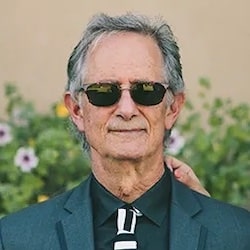
We regret to report the passing of Bay Area Visual Effects Artist Marc Thorpe – professional VFX Creature Designer and Model Maker. Marc passed away due to complications resulting from Parkinson’s disease on November 24, 2023 at the age of 77.
His credits include STAR WARS: EPISODE V – THE EMPIRE STRIKES BACK (1980), RAIDERS OF THE LOST ARK (1981), DRAGONSLAYER (1981), POLTERGEIST (1982), STAR WARS: EPISODE V – RETURN OF THE JEDI (1983), EXPLORERS (1985), HOWARD THE DUCK (1986), *BATTERIES NOT INCLUDED (1987), INDIANA JONES AND THE LAST CRUSADE (1989) and THE HUNT FOR RED OCTOBER (1990). Such films were revolutionary in advancing the art and technology of visual effects in the 1980’s. The creature and miniature model making VFX crews that Marc Thorpe worked with were vital to each project’s success and their enduring place in VFX cinematic history.
In the early 1990’s, Marc also founded “Robot Wars” – the popular sport of robot combat that is still wildly successful to this day, 30 years later.
The Visual Effects Society Bay Area Section salutes the life and times of Marc Thorpe – talented artist, designer, mechanical engineer, electronics specialist – and we offer our sincere condolences to this family, friends and colleagues.
Don Howe (1962-2023)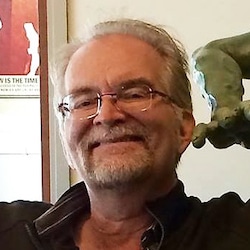
Long-time VES member Donald “Don” Edward Howe passed away peacefully at his home in Sacramento on Sunday, November 26 aged 61.
For many years, Don served Tippett Studio as a Department Manager on such VFX productions as HOLLOW MAN (2000), EVOLUTION (2001), HELLBOY (2004), ENCHANTED (2007), DRAG ME TO HELL (2009), PRIEST (2011), IMMORTALS (2011), THE SMURFS (2011), THE TWILIGHT SAGA: BREAKING DAWN PARTS 1 & 2 (2011 & 2012), MIRROR, MIRROR (2012), TED (2012), and AFTER EARTH (2013).
David Tanaka, VES 2nd Vice Chair said that Don looked “forward to local events with his wife, Jaynée, and son, Oscar. It was always a pleasure to see him, as well as meet for a quick lunch or dinner in subsequent years, talking about the industry, immersive technology, and, of course, friends and family.”
Don shared his professional interests with Oscar – together catching a VES screening or enjoying a VFX Q&A presentation. The family has extended the invitation for all of Don’s colleagues and friends are invited to click here to contribute to a memorial video. Our deepest condolences go out to the Howe family as well as Don’s friends and colleagues.
Diana Giorgiutti (1962-2023)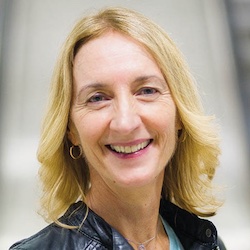
The VES Australia Section and the VFX industry at large mourn the passing of Visual Effects Producer and long-time VES member Diana Giorgiutti. Her journey was one of unwavering dedication, innovation, and a passion for pushing the boundaries of visual storytelling.
Diana’s extraordinary life was marked by her relentless pursuit of art and mathematics, upon which she built the foundation for her remarkable career. A native of Sydney, Australia, her curiosity after seeing STAR WARS led her to learn the technical aspects of the entertainment industry.
Diana’s ambition took her to London, where she produced music videos and witnessed the evolving landscape of the visual effects industry as it transitioned from generalists handling every aspect of a shot to more specialized artists working in various departments at larger facilities.
Giorgiutti contributed to the VFX of the Oscar-winners BABE and THE MATRIX as well as Visual Effects Producing AUSTRALIA, for which she won the Satellite Award. Her career took her to Marvel Studios, Luma Pictures and Sony Pictures Imageworks; but she always returned to producing on the show side of visual effects. She understood the importance of fostering strong relationships with vendors and her team, believing that taking care of people was the key to success.
Upon learning of her passing, former Society Chair Mike Chambers, VES said, “Di Giorgiutti was an accomplished VFX Producer with dozens of high-profile film projects among her credits over the last 30 years. She was wonderful woman and a dear friend & mentor to many in our industry. She will be truly missed.”
Diana’s legacy will live on through all of those in our industry whose career paths she shepherded. Our thoughts are with her family and friends.
Peter Kozachik, ASC (1951-2023)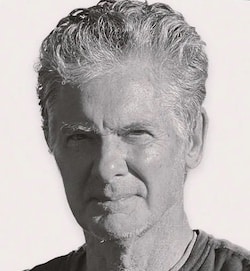
The visual effects Bay Area community and the world have lost a cinematic legend. Director of Photography/Cinematographer, Visual Effects Supervisor and Stop-Motion Animator, Peter Kozachik passed away on September 12, 2023 due to complications resulting from primary aphasia.
A longtime collaborator with Industrial Light & Magic and filmmakers Tim Burton and Henry Selick, Pete’s contributions to the craft of visual effects and animation are undeniable. To name just a few, his credits include STAR TREK IV: THE VOYAGE HOME (1986), INNERSPACE (1987), WILLOW (1988), GHOSTBUSTERS II (1989), ROBOCOP 2 (1990), THE NIGHTMARE BEFORE CHRISTMAS (1993), JAMES AND THE GIANT PEACH (1996) STARSHIP TROOPERS (1997), MONKEYBONE (2001), STAR WARS: EPISODE II – ATTACK OF THE CLONES (2002), THE MATRIX: RELOADED (2003,) CORPSE BRIDE (2005) and CORALINE (2009). Such movies were not only “box office hits,” but vitally integral to the sustainability of visual effects and animation filmmaking in the Bay Area.
Along with fellow Skellington Productions VFX colleagues Eric Leighton, Ariel Velasco-Shaw and Gordon Baker, in 1993 Pete was nominated for an Academy Award for his work on THE NIGHTMARE BEFORE CHRISTMAS – the stop-motion animated feature film (directed by Henry Selick with story by Tim Burton) beloved by fans across the world, now for 3 decades and counting.
In recent years, he authored “Tales From The Pumpkin King’s Cameraman” (2021) – a memoir of his work on THE NIGHTMARE BEFORE CHRISTMAS as well as other productions, offering a behind-the-scenes look and personal accounts of his time in the movie industry. He also contributed to MAD GOD (2021) – the dark and deeply personal stop-motion animated opus by Bay Area artist and filmmaker Phil Tippett, VES.
The visual effects Bay Area community and the world has lost a cinematic legend, but most importantly we have lost a beautiful human being.
The Visual Effects Society Bay Area Section offers our sincerest condolences to the Kozachik family, friends and colleagues, and together we salute the life and times of Pete Kozachik. Thank you, Pete, and All Hail The Pumpkin King!
David H. Tanaka Vice Chair of the Visual Effects Society, Executive Committee and Former Chair of the VES Bay Area Section
Jeff Casper (1964-2023)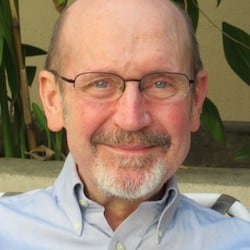
It is with a heavy heart that we remember Jeffery Casper who passed away at his home in June at 59. Jeff started at the Visual Effects Society in 2012 as Media and Graphics Manager where he served the Board, Committees and membership on our small staff for more than a decade. He was a fixture at scores of VES events during his tenure where he recorded, edited and posted many of the videos on our site and in our archive.
Jeff loved music, and was an avid guitarist and singer who played shows as often as he could. He made us all sound better when he sang Happy Birthday accompanied by his ukulele. His wry wit brought laughter to the VES office, and everyone who knew him will miss his zingers. Jeff was a devoted husband to his high school sweetheart whom he adored. He is survived by his loving wife Angie and their cat Phoebe, and the world is a better place for having him in it. We will miss him always.
Raulette Woods (1956-2023)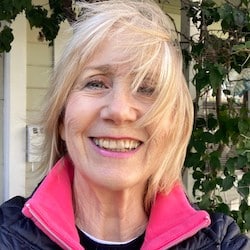
Long-time VES member and tireless volunteer Raulette Woods has passed away. Her first credit in the industry was in the animation department on TRON in 1982, but she was also a dancer at the sock hop in AMERICAN GRAFITTI from 1973. She was a Co-Founder and Co-Owner of Stargate Films and Stargames Interactive. She did scholarly research supported by UC Berkeley’s Research Studies in Neurology and Psychology, UC Irvine’s MIND Institute and was an American MENSA referred Mathematician.
Raulette volunteered at the Visual Effects Society for 5 years at VES Awards nomination events, VES Festivals, screenings and more. During her tenure at Stargate, she worked in visual effects, miniature photography and main titles on such projects as DANTE’S PEAK, TWISTER, THE INDIAN IN THE CUPBOARD, THE OUTER LIMITS, NAKED GUN: 33 1/3, PASSENGER 57, GHOSTBUSTERS II, BACK TO THE FUTURE PART II, MAX HEADROOM and many others as well as numerous games, commercials and music videos.
She will be missed by all who knew her, and her legacy in the VFX industry will live on. Our sincere condolences go out to her family and friends.
Chris Shaw (1975-2023)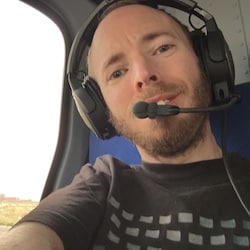
Having graduated in computer science from Cambridge in 1996 Chris joined Cell Animation where he was an early pioneer in interfacing motion control with 3D animation software, allowing revolutionary techniques to be developed which are used to this day in the VFX industry. He moved with a small team to help set up Ridley and Tony Scott’s Mill Film, where he was instrumental in writing various software used on a number of projects, including the Oscar winning VFX of GLADIATOR.
Thilo Kuther (1964-2022)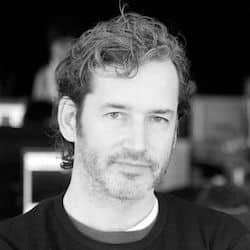
Long-time VES member Thilo Kuther, founder of Pixomondo, passed away on December 1st in Marina del Rey at the age of 58.
In 2001, Thilo founded Pixomondo in the small town of Pfungstadt, with offices in Stuttgart and Frankfurt am Main. Almost ten years later, he had led Pixomondo into a global company with locations in Berlin, Beijing, Shanghai, Los Angeles and Montreal, among others.
In 2018 Thilo sold his company to Mayfair Equity Partners but stayed on board as CEO and Executive Producer. In October of this year, Pixomondo was bought by Sony Pictures Entertainment, by which time Thilo had already retired.
Our deepest sympathy goes to his family and companions.
Lenny Lipton (1940-2022)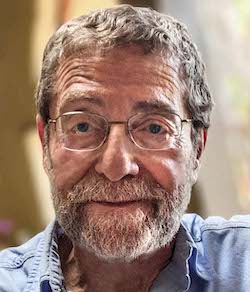
Lenny Lipton, 3D Filmmaking Pioneer and “Puff the Magic Dragon” Lyricist, Dies at 82
After the huge success of the Peter, Paul and Mary hit, he founded StereoGraphics and developed an electro-optical modulator known as ZScreen.
Lenny Lipton, who wrote the poem that became the Peter, Paul and Mary hit “Puff the Magic Dragon” and developed technology used for today’s digital 3D theatrical projection systems, has died. He was 82.
Lipton died Wednesday of brain cancer at Cedars-Sinai Medical Center in Los Angeles, his son Noah told The Hollywood Reporter.
While studying engineering as a freshman at Cornell University, Lipton, inspired by a 1936 Ogden Nash poem, “The Tale of Custard the Dragon,” wrote a poem in 1959 on a typewriter owned by another physics major at the school, Peter Yarrow.
Yarrow discovered the poem — about a boy named Jackie Paper and his imaginary dragon friend in a land by the sea — in the typewriter and years later used it for the lyrics to “Puff the Magic Dragon.”
Yarrow’s Peter, Paul and Mary recorded the song in 1962. It was released in January 1963 and peaked at No. 2 on the Billboard Hot 100 as one of the folk trio’s most enduring hits.
“Pirates and dragons, back then, were common interests in stories for boys,” Lipton told L.A. Weekly in a 2015 interview. “The Puff story is really just a lot like Peter Pan.”
The tune spawned a 1978 animated CBS special and two sequels, 1979’s PUFF THE MAGIC DRAGON IN THE LAND OF THE LIVING LIES and 1982’s PUFF AND THE INCREDIBLE MR. NOBODY, with Burgess Meredith voicing the dragon in all three.
A children’s picture book based on the song has sold more than a million copies and has been translated into more than a dozen languages.
Over the years, Lipton denied that “Puff” was about drugs, a “myth” he said was started by New York newspaper columnist Dorothy Kilgallen.
Yarrow had tracked down Lipton and granted him half the songwriting credit, and royalties allowed him to pursue his interest in filmmaking.
In the Hollywood 3D community, Lipton is known for developing the ZScreen electro-optical modulator – a tool used in digital 3D projection – through his company, StereoGraphics. After StereoGraphics was acquired by RealD in 2005, Lipton continued development of his technology as RealD’s chief technology officer.
Lipton also authored books including 1979’s Lipton on Filmmaking; 1982’s Foundations of the Stereoscopic Cinema; 1983’s Independent Filmmaking; and 2021’s The Cinema in Flux: The Evolution of Motion Picture Technology From the Magic Lantern to the Digital Era.
Born in Brooklyn on May 18, 1940, Leonard Lipton was 8 when his dad gave him a 16-millimeter projector. “It was a toy, but I really understood how it worked,” he said. “I didn’t take it apart as much as I really understood how it worked, so I made other things like it.”
Comic books and 3D movies in the early 1950s got Lipton interested in the stereographic medium, and in the ’60s, he shot several experimental films, including LET A THOUSAND PARKS BLOOM, about People’s Park in Berkeley, California.
He served as a production assistant on ONE FLEW OVER THE CUCKOO’S NEST (1975), founded StereoGraphics in 1980 and served as a convergence setter for the 3D film DOGS FROM HELL (1983).
As of 2015, Lipton held 68 patents and had dozens more pending. “The motion picture industry has made billions of dollars from my [ZScreen] invention, and they would be in the red and not the black if I had not done what I did,” he said.
The Smithsonian Institution honored him in 1996 for StereoGraphics’ invention of CrystalEyes, electronic eyewear for computer graphics and video applications such as molecular modeling, aerial mapping and medical imaging. (NASA selected it to remotely pilot the Mars Rovers, and it was used by Lockheed to upgrade the Hubble Space Telescope.)
In 2011, the International 3D Society (now the Advanced Imaging Society) presented him with its Century Award for Lifetime Achievement.
Survivors include his wife, Julie, and children, Anna, Noah and Jonah.
Taken from The Hollywood Reporter
Margaux Durand-Rival (1985-2022)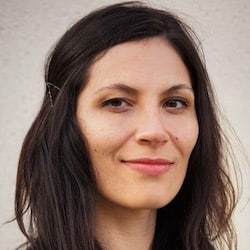
With a heavy heart, we are sad to announce the passing of VES France Board of Managers Co-Secretary, Margaux Durand-Rival.
After graduating from Supinfocom Arles, Margaux began her VFX journey in the creative studio Sabotage in Paris before moving to The Third Floor Inc. in London where she solidified her burgeoning career working as Lead Previs Artist on feature films such as MISSION: IMPOSSIBLE – ROGUE NATION, EDGE OF TOMORROW, EXODUS: GODS AND KINGS and ROGUE ONE: A STAR WARS STORY, for which she was nominated for a VES Award.
She brought her experience back to Paris and became a partner at Les Androïds Associés, the only Previs company working on, among other shows, TERMINATOR: DARK FATE. She recently co-founded Dark Matters, a company specialized in Virtual Studios.
Margaux dedicated her time to the passionate promotion of VFX in Paris, and was a true ambassador for our Industry. She was a member of the French Academy (The Césars) and was committed to the French Film Council (CNC).
Her kindness, generosity and talent will be missed. Margaux leaves behind a husband and their two children and we send our deepest and sincere condolences to her family, friends and colleagues.
VES France Board of Managers
Le Board de la VES France a la tristesse d’annoncer à ses membres la disparition de notre si talentueuse co-secrétaire Margaux Durand-Rival.
Margaux s’est dédiée à travers sa carrière de superviseuse des effets visuels à la promotion et l’amélioration de notre art. (ROGUE ONE: A STAR WARS STORY, MISSION: IMPOSSIBLE – ROGUE NATION, EXODUS: GODS AND KINGS, EDGE OF TOMORROW, LOVE DEATH AND ROBOTS, ASSASSIN’S CREED VALHALLA…pour ne citer qu’eux), elle est une précurseure et une véritable inspiration quant à son engagement.
Margaux, après une longue collaboration chez Les Androids Associés était dernièrement devenue cofondatrice du studio Dark Matters. Elle a pris part aux plus hautes instances techniques et artistiques, le CNC, l’Académie des César, la VES,.. toujours en honorant les traditions les plus nobles à son esprit de pionnière, alliant avec brio la technicité comme vecteur artistique.
Sa carrière est exemplaire.
Collègues, membres et ami.e.s, nous nous associons de tout cœur au deuil de sa famille et de ses proches, dans sa perte inestimable.
Ta bienveillance et ta bonne humeur nous manqueront.
Pour Margaux, bien à toi.
Le Board de la VES France
Gregory Jein (1945-2022)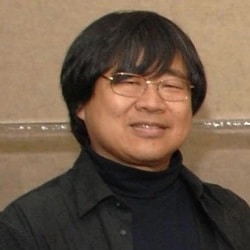
Gregory Jein, the acclaimed model maker and artist who worked on eight STAR TREK properties and earned Oscar nominations for Steven Spielberg’s CLOSE ENCOUNTERS OF THE THIRD KIND and 1941, has died. He was 76.
Jein died May 22 in his Los Angeles home after a long history of health issues that included a battle with diabetes, a family spokeswoman told THE HOLLYWOOD REPORTER. His family elected to keep his death quiet until this week, she added.
According to the website Memory Alpha, Jein began his association with STAR TREK in 1977 by designing a Klingon battle cruiser for STAR TREK: PHASE II, which would have been the first live-action spinoff of NBC’s original STAR TREK had it gone forward.
He collaborated with visual effects maestro Douglas Trumbull, VES on STAR TREK: THE MOTION PICTURE (1979), then followed with STAR TREK V: THE FINAL FRONTIER (1989), STAR TREK VI: THE UNDISCOVERED COUNTRY (1991), STAR TREK: INSURRECTION (1998) and STAR TREK X: NEMESIS (2002) and the STAR TREK shows THE NEXT GENERATION, DEEP SPACE NINE and VOYAGER.
Much of his work was done through his company, Gregory Jein Inc., which he launched in 1979.
He shared Emmy nominations for the 1996 DEEP SPACE NINE episode “Trials and Tribble-ations” and for the 2003 HBO miniseries ANGELS IN AMERICA and received eight excellence in production design noms from the Art Directors Guild, the most recent for his contributions as a model maker to the live-action MULAN (2020). Jein received an Honorary Membership in the Visual Effects Society in 2020.
The modest Jein shared visual effects Oscar noms with Trumbull, Roy Arbogast and brothers Matthew and Richard Yuricich on CLOSE ENCOUNTERS OF THE THIRD KIND (1977) and with William A. Fraker and A.D. Flowers on 1941 (1979). He spent about two years on the latter, which he called one of his most rewarding jobs.
His résumé also included Christopher Nolan’s THE DARK KNIGHT RISES (2012) and INTERSTELLAR (2014), plus ONE FROM THE HEART (1981), THE ADVENTURES OF BUCKAROO BANZAI ACRSS THE 8TH DIMENSION (1984), THE HUNT FOR RED OCTOBER (1990), JUDGE DREDD (1995), THE SCORPION KING (2002), FANTASTIC FOUR (2005), AVATAR (2009), REEL STEEL (2011), JOHN CARTER (2012) and ALICE THROUGH THE LOOKING GLASS (2016).
He worked for ILM, Boss Film Corp., Walt Disney Imagineering and other production houses.
“We look to have fun and make everything the best we can on any project we work on,” he explained in a 2015 interview for StarTrek.com.
Born in Los Angeles on Oct. 31, 1945, Jein spent most of his life in the Crenshaw district and attended Audubon Junior High, Dorsey High School and Cal State Los Angeles. He was especially fond of telling stories from his childhood of stuffing fortune cookies fresh from the oven at the Famous Hong Kong Noodle Co.
He did special effects for the X-rated FLESH GORDON and John Carpenter’s DARK STAR both released in 1974, then worked on the NBC telefilm THE UFO INCIDENT and the WONDER WOMAN pilot for ABC the next year.
His work with Trumbull began with a three-month assignment at the Future General Corp. His major contribution as chief model maker to CLOSE ENCOUNTERS was the ethereal Mothership, a virtual city in the sky that rose above Devil’s Tower. (The model is now housed in the Smithsonian’s Steven F. Hazy Center.)
On Facebook, longtime STAR TREK graphic designer Michael Okuda said he was “deeply saddened” by Jein’s death.
“Greg had a wry sense of humor and was endlessly inventive,” the three-time Emmy nominee wrote. “He always seemed to find a way to provide us with spaceships, even when only a tiny budget was available. He genuinely loved STAR TREK and was always generous with his expertise and his experience, giving many top modelers their start in the business. Greg had been ill for some time, but his passing is nevertheless a gut punch.”
Survivors include his cousins Eleanor, Cheryl, Jerry, Vivian, Laura and Janice and their families. A celebration of his life is being planned.
In the StarTrek.com interview, Jein called himself “a collector and an accumulator” of comic books, pulp magazines and movie/TV memorabilia and revealed that he once bought a script from the original STAR TREK series before the episode even aired.
“I have a hard time throwing anything away,” he said.
Taken from THE HOLLYWOOD REPORTER.
Eric Grenaudier (1964-2022)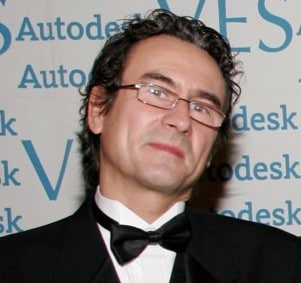
Long-time VES member Eric Grenaudier passed away unexpectedly, at the age of 57 years old, on May 29, 2022.
Eric is survived by his teenage daughter, Luciana, and her mother, Angela who both live in Australia. Eric’s eldest sister, France, who lives in New Zealand, his parents François and Béatrice, and his sisters, Florence and Nathalie, who live in France.
Eric holds a very special place in the hearts of all those who were lucky enough to call him a friend, a brother, a son, a father, a partner or a colleague. He was a worldly, intellectual and curious person, and his understanding of world politics and history always yielded meaningful conversation and debate. One always came away more informed from those interactions.
Eric worked at Stargate Films since the 1990’s where he became a respected Visual Effects Supervisor. Among his many professional accolades, Eric was a six time VES Award nominee and two time winner, and five time Emmy nominee and two time Emmy winner. Those who knew him know that he was a force of nature on set, and beloved by cast, crew, and directors alike.
Sari Gennis (1954-2022)
The VFX and animation world lost a bright light in 25-year VES member Sari Gennis. Sari was an active member of the Visual Effects Society, The Animation Guild, WGA West and was a founding member of Women in Animation.
As a VES member since 1997, Sari served for many years on the Education Committee where she worked tirelessly for the improvement of our members and future artists. She helped grow our numbers over many years through her service on the Membership Committee. During her three terms on the VES Board of Directors she brought her experience as a VFX animator and animator to that body. Despite her significant physical challenges, she lit up every room she entered.
“I was fortunate enough to serve with Sari on the VES Board a few times and alongside her on the Education and Membership Committees”, said VES 2nd Vice Chair Susan O’Neal. “Sari was an incredibly talented animator, a lifelong learner and teacher, and a truly extraordinary human being. She fought her battles valiantly and with amazing good humor, never missing an opportunity to pay witness to the beauty around her in the work she created. We will sorely miss our playful, beautiful, and compassionate Animatrix.”
Sari worked at many studios, including Robert Abel & Associates, Walt Disney Animation Studios, Kroyer Films, Digital Domain, Deluxe, The Third Floor and as an independent animator. Her credits include: STAR TREK: THE MOTION PICTURE, TWILIGHT ZONE: THE MOVIE, FERNGULLY: THE LAST RAINFOREST, JAMES AND THE GIANT PEACH, FANTASIA 2000, THE CHRINICLES OF RIDDICK, THE AVENGERS, STAR TREK INTO DARKNESS and many others. Sari was a quiet, determined, joyous groundbreaker, beginning as a student at CalArts in the animation department.
She will be greatly missed by all those whose lives she touched.
Michael Pecchia (1969-2022)
On February 18 long time VES member Michael Pecchia unexpectedly passed away, leaving behind his 17-year-old daughter, Mya. During his time at Aaron Sims Creative, Prime Focus, Cafe FX, Digital Domain, Rhythm & Hues and many more, Michael shared his immense warmth, kindness and encouragement.
Everyone who spent time with Michael will agree that he was one of those rare shining lights who, despite personal challenges or the stresses associated with a project, had the innate gift to make people feel good about themselves and the world around them. An Active member of the Society, Michael’s contributions to our industry are accented by his sincere and positive attitude towards our craft and the lives of those around him. He will be missed by all who knew him, and the world is a better place for having him spend far too little time in it.
Alan Ladd, Jr. (1937-2022)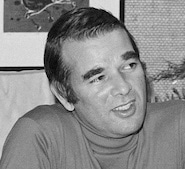
Oscar-winning producer and influential motion picture executive Alan Ladd Jr., who ushered in the STAR WARS era of motion pictures, died Wednesday. He was 84.
“With the heaviest of hearts, we announce that on March 2, 2022, Alan Ladd, Jr. died peacefully at home surrounded by his family. Words cannot express how deeply he will be missed. His impact on films and filmmaking will live on in his absence,” his daughter Amanda Ladd-Jones, who directed the documentary “Laddie: The Man Behind the Movies,” wrote on the film’s Facebook page.
During his tenure at 20th Century Fox in the late 1970s, Ladd greenlit STAR WARS, a $10 million sci-fi film that would become the yardstick for blockbuster movies and tentpole film franchises thereafter. He was the son of golden age film star Alan Ladd, best remembered for SHANE, but in many ways, Ladd Jr. had a more substantial effect on Hollywood than did his famous dad.
In later years, Ladd became an independent producer, and his most notable accomplishment was 1995 Oscar best picture winner BRAVEHEART, starring and directed by Mel Gibson.
Ladd led Fox through a crucial period in the ’70s and later topped MGM (twice). He also ran the Ladd Co., one of the first major boutique production companies as well as an independent distributor of many of its own films. Despite financial troubles, the Ladd Co. was responsible for such major films as ONCE UPON A TIME IN AMERICA, THE RIGHT STUFF, BLADE RUNNER and, more recently, Ben Affleck’s GONE, BABY GONE.
Affectionately known in the industry as Laddie, Alan Ladd Jr. was noted for his good taste, his warmth and general low-key (some said inaudible) manner, which made him a singular personality among top studio executives. He had the scruples to quit his $2 million-a-year job as head of 20th Century Fox because his staff was not being compensated well enough for its efforts on such blockbusters as STAR WARS and ALIEN. He represented an older era in Hollywood when executives and even agents (he started his career as an agent for the likes of Robert Redford and Judy Garland at CMA under Freddie Fields) still possessed a modicum of gentility. While that made him popular with filmmakers like George Lucas, Norman Jewison and Ridley Scott, it also brought criticism from a new generation of executives and agents who were more bold, brash and cutthroat.
But then, most of them did not come from Hollywood royalty like Ladd (and fellow executive producer Richard Zanuck). Alan Walbridge Ladd Jr. did not come to live on his father’s Holmby Hills estate, where the likes of Bing Crosby and Gary Cooper would stop by, until he was in his teens, having spent most of his formative years with his mother, following his parents’ divorce. His father died at age 50 in a possible suicide. Ladd Jr. rarely spoke of his father and bridled (or rather shuddered) when questions about him were raised in his presence.
He worked briefly in his stepfather’s real estate business after serving in the Air Force. Then, in 1963, the self-professed movie buff he took at job at Creative Management Associates and traveled between L.A. and London, where he got his first taste of independent production with such films as VILLAIN, THE WALKING STICK and A SEVERED HEAD.
In 1973 he joined 20th Century Fox as a VP of production, moving up to head of production in 1974 and president in 1976. His start was rocky, but thanks to such hits as THE OMEN, Mel Brooks’ SILENT MOVIE and the $500 million-grossing 1977 blockbuster STAR WARS, Ladd quadrupled income and net profits at the company from 1974 through his departure in 1979. He also nurtured prestigious pictures like ALL THAT JAZZ and BREAKING AWAY.
He was handsomely compensated for his success: the sum of $2 million a year was then a high point for studio executives. But besides the phenomenon of Lucas’ TAR WARS, which had been turned down by several other studios, Ladd was also responsible for another Fox franchise film, Ridley Scott’s horror sci-fier ALIEN, and such strong women’s vehicles as THE TURNING POINT, JULIA, AN UNMARRIED WOMAN and THE ROSE. (ALIEN featured a female heroine played by Sigourney Weaver – then unheard of in such a male-oriented genre). He also greenlit such high-concept, high-grossing comedies as YOUNG FRANKENSTEIN and SILVER SREAK.
When he exited after a philosophical dispute with company chairman Dennis Stanfill, Fox went into a deep slump from which it would not start to recover until the arrival of Barry Diller in 1984.
Warner Bros. then offered to set up and help fund the Ladd Co., to which he brought his faithful cadre of executives. Jay Kanter (also a former agent), Gareth Wigan and Ashley Boone. Among the company’s early releases was BODY HEAT, which launched the careers of actors William Hurt and Kathleen Turner, as well as that of its director, Lawrence Kasdan. NIGHT SHIFT gave Ron Howard his studio movie start. CHARIOTS OF FIRE won the Oscar for best picture in 1981. As a favor to producer friend Paul Maslansky, he produced the inane POLICE ACADEMY, which began another profitable franchise.
But there were too many setbacks at the Ladd Co., which reportedly lost more than $150 million over its tenure through the mid-’80s. Ladd passed on Kasdan’s THE BIG CHILL, a definitive movie of that era, and Howard’s SPLASH, a major hit at Disney, and produced such prestigious but costly films as ONCE UPON A TIME IN AMERICA, BLADE RUNNER and THE RIGHT STUFF.
Ladd was then hired by Kirk Kerkorian to head up the United Artists company at his MGM/UA. He would later take over MGM as well. But it was the first of his two tempestuous tenures at the company. Saddled by Kerkorian’s dismantling of the two companies’ assets, Ladd was able to turn out little in the way of valuable and profitable productions – MOONSTRUCK, A FISH CALLED WANDA and RAIN MAN were three of the rare hits. After the studio was sold to Ted Turner and a shell of it sold back to Kerkorian, Ladd left in 1988.
He then, oddly, paired up with entrepreneur-con artist Giancarlo Parretti, heading up Parretti’s Pathe company, which acquired MGM/UA in 1990. But Parretti was always one step ahead of the law (here and abroad) and finally had to relinquish the studio amid a mountain of debt. During this period, saddled with debt and a lack of production and marketing funds, Ladd managed to get off only the hit THELMA AND LOUISE.
When Frank Mancuso, former head of Paramount Pictures, was brought in by MGM/UA creditors Credit Lyonnais, Ladd departed and set up an indie production shop at Paramount, receiving a reported $10 million settlement. At Paramount, Ladd settled into hands-on movie production again without the management responsibilities or bottom line worries of running a studio or funded company, reforming the Ladd Co. He had many ties to talent, but he was thought to be out of step with a new crop of directors, producers and stars, and his leadership style and taste in material were thought to be passe in the new mega-corporate Hollywood.
Yet in 1996, Ladd found himself on the podium at the Academy Awards accepting the best picture Oscar for BRAVEHEART, which had not been expected to win, though Gibson was the favorite for (and won) the best director Oscar. It was precisely the type of old-fashioned epic that had inspired Ladd to enter the movie business.
Ladd also produced well-regarded hit comedies THE BRADY BUNCH MOVIE and A VERY BRADY SEQUEL during this period, along with underwhelming actioner THE PHANTOM, with Billy Zane, and was exec producer on the 1998 all-star take on THE MAN IN THE IRON MASK toplined by Leonardo DiCaprio.
Ladd took the Ladd Co. off the Paramount lot in the early 2000s and produced Lasse Hallstrom’s well-regarded AN UNFINISHED LIFE (2005), starring Robert Redford, Jennifer Lopez and Morgan Freeman, and Ben Affleck’s critically hailed 2007 Boston thriller GONE, BABY GONE.
Taken from VARIETY.
Douglas Trumbull, VES (1942-2022)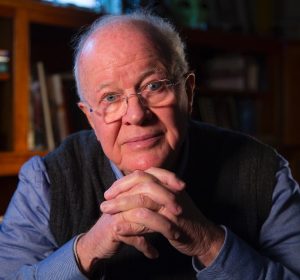
The visual effects visionary who, without CGI, fashioned the kaleidoscopic finale for 2001: A SPACE ODYSSEY, concocted the creepy cloud formations in CLOSE ENCOUNTERS OF THE THIRD KIND, filled the BLADE RUNNER universe with smoke and fireballs and helped create the birth of the universe that opens THE TREE OF LIFE, has died. He was 79.
Trumbull died Monday after a “major two-year battle with cancer, a brain tumor and a stroke,” his daughter Amy wrote on Facebook. She told The Hollywood Reporter that he died in Albany, New York. “My sister Andromeda and I got to see him on Saturday and tell him that we love him and we got to tell him to enjoy and embrace his journey into the Great Beyond,” she added.
The Los Angeles native received three visual effects Oscar nominations (for 1977’s CLOSE ENCOUNTERS, 1979’s STAR TREK: THE MOTION PICTURE and 1982’s BLADE RUNNER) in a six-year span. The Academy awarded him a Scientific and Engineering Award in 1993 for the creation of his Showscan Camera System and the Gordon E. Sawyer statuette in 2012 for his career contributions.
“Doug was a true giant and artistic genius.” said VES Chair Lisa Cooke. “He was incredibly inventive, and had such a deep love of visual storytelling and creating effects to advance our craft. A self-confessed ‘geeky creative,’ Doug changed the course of cinema with his exceptional talent and he leaves an enormous imprint on the industry, our Society and everyone he touched. His passion, generosity and pioneering spirit will be greatly missed.”
“Doug loved high frame rates,” said Dennis Muren, VES, “and he did a lot of terrific testing trying to sell it to the industry. He pushed it going all the way back to Showscan in the ‘70s. It wasn’t practical then, but a very few of us along with James Cameron and Ang Lee saw the benefits.”
“Doug was very open too” continued Muren. “I was shooting a 16mm project when he was at Graphic Films, and Doug offered me a little 2 foot track with ball-bearings for a smooth camera move. At the time, beyond buying film, it was really hard to get anything machined. Doug pioneered the age of precision filmmaking to make each shot repeatable. I give so much of the credit to Doug for 2001 along with Pederson and Kubrick.”
Doug Trumbull was granted a Lifetime VES Membership in 2009, was named a VES Fellow in 2010 with inaugural Fellows Dennis Muren and Jonathan Erland, VES, and was inducted into the VES Hall of Fame at its inception in 2017. Doug gave a Luminary Interview in 2019 for the VES Archives, and shared his wealth of experience in a VFX Pros: Home Edition discussion and a VES 70 talk about 2001: A SPACE ODYSSEY in 2020.
Director Robert Wise hired Trumbull to handle special photographic effects skills for THE ANDROMEDA STRAIN (1971), then asked him to helm two memorable sequences for the first STAR TREK movie — the docking sequence aboard the Enterprise and Spock’s spacewalk.
On Stanley Kubrick’s 2001, Trumbull’s responsibilities grew rapidly as production moved along, and he found himself tasked with what would become his signature creation, the out-of-this-world corridor of light finale dubbed the Star Gate sequence.
He recalled in a 2018 VFX Voice article a camera technique that he had seen animator John Whitney use at the 1964 World’s Fair where he left the camera shutter open “while you move things around under controlled situations so you can create a controlled blur, and repeat the moves.”
Expanding on that concept, Trumbull built a six-foot-tall rotatable rectangle of sheet metal and cut a narrow slit in it. The sheet was placed in front of a 12-foot-long backlighted glass panel through which various lighting patterns were shined.
By tracking the camera toward the light source with a long exposure, the kaleidoscope of lights appeared to dart toward the camera from a single point. The whole process took six months.
While on 2001, Trumbull began conceiving his concept for his directorial debut, SILENT RUNNING. The film’s ecological theme of a greenhouse botanist in space achieved cult status, all on a $1 million budget.
“I wanted to say something about the future that would be very much human, and very real, but I wanted to take the sterility and the mechanization out of it,” he said in the film’s making-of documentary. “I don’t think astronauts have to be automatons, I don’t think they have to be emotionless.”
Throughout the 1970s, Trumbull was so in-demand, he declined work on George Lucas’ STAR WARS.
Around the same time, Steven Spielberg, then 29, began principal photography on his own sci-fi epic, CLOSE ENCOUNTERS. In preparation, he rewatched Kubrick’s 2001 and found the masterpiece intimidated him more than it inspired him.
He noted the visual effects crew were predominantly based in Britain, except for L.A. resident Trumbull, who was under contract at Paramount Pictures. Spielberg hired him on a loan-out to contribute special effects.
Early on, Trumbull suggested using motion control, a process that allowed filmmakers to pan, tilt and dolly while still locking their visual effects in the frame. It marked a huge leap in technology from the B-grade sci-fi movies of the 1950s in which a model UFO flimsily floated across a locked-off camera.
In one of the film’s most memorable sequences, ominous clouds begin encasing Devils Towers, warning of the alien mothership’s arrival.
Trumbull created the effect in a huge aquarium tank filled with fresh and saltwater and by injecting white liquid tempera paint to create the strange cloud formations.
He also contributed the idea to use hand signals, invented by John Curwen in the 1800s and later adapted by Hungarian composer Zoltán Kodály, to communicate with the aliens. He knew a woman who taught the method and got her to train Francois Truffaut, who played French scientist Claude Lacombe in the film.
Two years later, Trumbull answered an SOS from Wise, who was directing STAR TREK. He was unhappy with film’s visual effects in production, and a lawsuit loomed from exhibitors if the movie was not delivered on schedule.
Trumbull agreed to take on the tight deadline — six months to complete more composites than STAR WARS and CLOSE ENCOUNTERS combined — in exchange for a considerable fee and release from his Paramount contract. Three crews worked across 24-hour periods, seven days a week, to beat the deadline.
Wise allowed Trumbull to re-conceive and direct the film’s most celebrated sequence, the shuttle pod circling the majestic Enterprise before docking. It contains no dialogue, a decision Trumbull credits from working with Kubrick, who taught him to “stop talking for a while and let it all flow.”
Trumbull also helmed Spock’s spacewalk, which clearly borrowed from his 2001 Star Gate sequence. “I thought it would be fun to just get kind of abstract and make it a fantasy dream sequence in a way, not literal,” he said.
As special photographic effects supervisor for Ridley Scott’s BLADE RUNNER, Trumbull devised the concept of projecting images onto blimps and buildings and was the driving force behind the use of smoke to create the illusion of depth and distance.
For the famous opening of fireballs exploding over Los Angeles in November 2019, Trumbull used unreleased footage of explosions he had shot for Michelangelo Antonioni’s ZABRISKIE POINT (1970).
About one-third into principal photography, Trumbull left to begin work on BRAINSTORM, a sci-fi concept of transferring images and sensations from one human to another.
The film was to introduce his Showscan process (70mm film photographed at 60 frames per second) during the virtual reality sequences, but MGM balked at the idea because of the cost. Then, during a production break in November 1981, Wood drowned under mysterious circumstances during a boat trip to Catalina island.
MGM filed an insurance claim, and Lloyd’s of London put up the remaining money to complete the film. The dedication “To Natalie” appears after the closing credits.
The circumstances of her death and his battles with MGM affected Trumbull greatly, he said. “I just had to stop,” he told THR‘s Scott Feinberg in 2014. “I had been a writer-director all my life, and I decided it wasn’t for me because I was put through a really challenging personal experience. … I decided to leave the movie business.”
He redirected his passion into work on new technology for cinema and filmmakers and created the BACK TO THE FUTURE ride at Universal Studios.
Trumbull was lured out of a 30-year movie retirement by Terrence Malick to work as a visual effects consultant under Dan Glass on THE TREE OF LIFE (2011), and he came up with elements of the mind-blowing opening sequence that shows the creation of the life in about 20 minutes.
Trumbull used all his practical knowledge from the previous six decades — fluorescent dyes, smoke, high-speed photography, chemicals, frame rates and folded lenses — to create a sequence he was born to build.
During a 2011 appearance at the Museum of Moving Image in New York, Trumbull noted that Malick “doesn’t like drawings, doesn’t like storyboards, doesn’t even like planning. He hopes some mysterious unexpected event is going to happen while the camera happens to be running. And I thought, ‘This is totally cool, this is more what I think filmmaking should be like.’”
Douglas Huntley Trumbull was born on April 8, 1942. His father, Don, lent his special effects knowledge to the flying monkeys and talking apple trees and controlled the Cowardly Lion’s tail with a fishing rod and monofilament line for THE WIZARD OF OZ (1939).
(His dad received two Scientific and Technical Achievement Oscars and worked with his son on SILENT RUNNING and CLOSE ENCOUNTERS before his 2004 death at age 95.)
As a teenager, Trumbull constructed crystal-set radios, fell in love with sci-fi films and serials and dreamed of becoming an architect.
Southern Californian production company Graphic Films, which produced content for NASA, was impressed with his portfolio art of spacecrafts and planets and hired him to paint a rotating spiral galaxy for their 1964 New York World’s Fair film TO THE MOON AND BEYOND.
Shot in Cinerama and running 18 minutes, the experimental piece used a fish eye lens and was projected at the custom-built dome in the Transportation and Travel Pavilion.
Among the 51 million visitors to the fair were author Arthur C. Clarke and Kubrick, who then hired Trumbull (and Graphic Films director Con Pederson) to work on preliminary designs for 2001.
Trumbull began drawing sketches of moon bases and spacecrafts before Kubrick suddenly moved production to England, leaving him to make ends meet by working for a furniture company.
Frustrated, he asked Pederson for the reclusive director’s private phone number, which Pederson surreptitiously suggested just might be written on his office bulletin board. Trumbull cold-called Kubrick, who offered him $400 a week to come to England.
His initial remit was designing computer-screen readings and data that scrolled and flashed on the Discovery One spaceship monitors. A practical solution was to photocopy thousands of pages of graphs and charts from Scientific American magazine.
“We set up our own 35mm Mitchell camera with stop-motion motor, and with the help of a very talented and artistically oriented cameraman [Bruce Logan], we began the job of pasting up and juggling around artwork under the camera as we were shooting,” he told American Cinematographer magazine in 1968.
An impressed Kubrick began sharing his philosophy to the impressionable Trumbull. “If everybody is doing something one way, I want to do another way,” he told him. “I don’t care what it is, we’re going to do upside-down if right side up is correct.”
What many forget about Trumbull’s 2001 legacy is that he also was responsible for another key moment in the film: the killing of the hibernated crewmembers. Early script revisions had them remaining alive while Bowman (Keir Dullea) enters the Star Gate alone.
But in Michael Benson’s 2018 book, Space Odyssey: Stanley Kubrick, Arthur C. Clarke, and the Making of a Masterpiece, Trumbull recalled entering Kubrick’s office with a suggestion.
“Isn’t it kind of messy to leave all those guys back on the ship?” he asked. “Isn’t there some way to kind of get rid of them? I don’t think this story’s going to work if you leave them behind, unresolved.”
Kubrick was incensed. “Get the fuck out of my office and pay attention to your own goddam business. I’m the director of this movie,” he replied.
But four days later, revisions to the script were passed around, and now the rest of the crew has been murdered by the HAL 9000 computer. “Drastic, but it seems right,” Trumbull wrote in his journal. “After all, Odysseus was the sole survivor.”
Trumbull later created the Star Gate-esque title sequence for the anthology series ABC Movie of the Week, was inducted into the Science Fiction Hall of Fame in 2010 and received the George Méliès award from the Visual Effects Society at the 10th Annual VES Awards in 2012. Click here to watch his clip reel.
In addition to his daughters, survivors include his second wife, Julia. His first wife was the late Ann Vidor, a wardrobe adviser on SILENT RUNNING.
2001 may have kick-started his career, but it also caused him to have a falling-out with Kubrick — all over a film credit.
Trumbull is one of four men (along with Pederson, Tom Howard and Wally Veevers) who receive a standalone title card of “special photographic effects supervisor.” However, it was Kubrick, credited with “special photographic effects designed and directed by,” who received the visual effects Academy Award in 1969, the film’s lone Oscar.
Trumbull disputed that Kubrick designed the effects and thought the filmmaker should have lobbied the Academy to allow four recipients.
Subsequent interviews and articles about the film often referenced Trumbull as creating the special effects, a description that infuriated Kubrick to the point he sent stern letters to Trumbull.
In 1984, the issue reached a boiling point when Hewlett-Packard published an ad crediting Trumbull solely with the visual effects. Kubrick and MGM threatened legal action, and the ad was removed.
Kubrick then bought his own full-page ad that quoted the Hewlett-Packard ad and noted that “Mr. Trumbull was not in charge of the Special Effects of ‘2001’. He also listed all five men in order of their “comparative contributions,” and Trumbull came in third.
For a decade the two did not speak until Trumbull cold-called him (again) to thank him for the impact he had on his career. Kubrick replied, “Wow, thanks.” It was the last time they would speak.
Kubrick died in March 1999 of a sudden heart attack. Trumbull attended the funeral at the filmmaker’s estate at Childwickbury Manor in England, and Spielberg, Tom Cruise and Nicole Kidman were among those who spoke. Mourners were invited to take a rose off the top of the casket, along with a pinch of earth, and drop them into an open pit at the base of an evergreen tree.
At one point, Trumbull managed to slip away and sat alone on a chair beside Kubrick’s open grave. He later told Benson what he said beside the casket:
“Stanley, all this crap that happened was stupid, and that’s not what it’s all about. We’ve had our disagreements, and that’s been challenging, but I don’t care. I don’t care. None of that is important to me. I’m here because I love you, and I think that what you did was so important to cinema, and to my art form and to my life, and I’m honored to be here. Thank you for changing my life.”
Click here to watch Doug Trumbull’s Luminary Interview in the VES Archives.
Compiled from THE HOLLYWOOD REPORTER and other sources.
Robert Blalack (1948-2022)

Robert Blalack, the Industrial Light & Magic co-founder who shared an Oscar for his contribution to the groundbreaking visual effects employed on the original STAR WARS has died. He was 73.
Blalack died Wednesday[, February 7] of cancer at his home in Paris, his wife, writer Caroline Charron-Blalack, told THE HOLLYWOOD REPORTER.
Blalack also shared an Emmy for his VFX work on THE DAY AFTER, the 1983 ABC telefilm about a nuclear war between the U.S. and Soviet Union that drew 100 million viewers and was the highest-rated TV movie in history at the time.
Born in Panama on Dec. 9, 1948, Blalack attended St. Paul’s School in London and Pomona College and Cal-Arts in California.
He had worked at Crest Digital and on Peter Davis’ Oscar-winning Vietnam documentary HEARTS AND MINDS (1974) when he met John Dykstra during production of a doc about Douglas Trumbull’s VFX house Future General Corp.
The two then teamed with George Lucas and others to launch ILM, and he, Dykstra, John Stears, Richard Edlund and Grant McCune won the effects Academy Award for STAR WARS (1977). Blalack designed and supervised the composite optical production pipeline that produced all 365 VistaVision VFX shots for the film.
“We discovered that building ILM from scratch during production was like jumping out of a plane and stitching up the parachute during free fall,” he said during an ILM reunion in 2017.
In 1980, Blalack produced the visual effects for the 13-part PBS documentary series CARL SAGAN’S COSMOS: A PERSONAL VOYAGE.
His film résumé also included METEOR (1979), John Landis’ THE BLUES BROTHERS (1980), AIRPLANE! (1980), Ken Russell’s ALTERED STATES (1980), WOLFEN (1981), Paul Schrader’s CAT PEOPLE (1982) and Paul Verhoeven’s ROBOCOP (1987), and he did lots of work for theme park rides as well.
In addition to his wife, survivors include his son, Paul.
Taken from THE HOLLYWOOD REPORTER
Bill Taylor, VES, ASC
It is with tremendous sorrow that we announce the passing of Bill Taylor, VES, ASC at 77. Bill was an original founding member of the Visual Effects Society as well as a VES Fellow, long-time Board Member, Lifetime VES Member and recipient of the VES Founders Award. He joined the Motion Picture Academy in 1972 and was a founding co-chair along with Ray Freeney, VES of the Science and Technology Council. Bill was a member of the American Society of Cinematographers and former Governor of the Academy’s VFX Branch.
Bill was honored with the Academy’s Technical Achievement Award for the concept and specifications for a Two Format, Rotating Head, Aerial Image Optical Printer, and received the John A. Bonner Medal of Commendation. He received 2 Emmy nominations for his work on STAR TREK: THE NEXT GENERATION and won the Emmy for A.D. with his mentor Albert Whitlock as well as matte painter and partner Syd Dutton with whom he co-founded Illusion Arts in 1983. Bill was the recipient of the Art Directors Guild’s Contribution to Cinematic Imagery award along with Dutton, and over 25-years Illusion Arts provided visual effects for more than 200 films.
“Bill was a wonderful, giving colleague and I was honored to know him” said VES Chair Lisa Cooke. “He was a special talent with an astonishing career, and made exceptional contributions to visual effects and filmed entertainment. Bill left an indelible mark on the industry, our Society and everyone he touched. His generous spirit will be greatly missed.”
VES Fellow and Board Treasurer Jeffrey A. Okun, VES said, “Bill Taylor was an amazing human being, an extremely talented cinematographer, a wonderful friend and probably the most generous person I have ever met. He shot for me on several films and when he owned Illusion Arts with Syd Dutton, he was a geyser of wisdom, advice, guidance and good times. Every time I saw Bill he would try out a new magic trick on me – and, being a fellow magician – still would not share the secrets with me. He will be sorely missed from our world, which is now a much sadder place.”
Bill was visual effects supervisor, provided optical effects or matte painting photography for such films as LAWLESS, PUBLIC ENEMIES, MILK, MIAMI VICE, THE FAST AND THE FURIOUS franchise, AEON FLUX, LADDER 49, BRUCE ALMIGHTY, STAR TREK: NEMESIS, xXx, THE BOURNE IDENTITY, U-571, BICENTENNIAL MAN, WHAT DREAMS MAY COME, DRAGONHEART, BATMAN FOREVER, THE ADDAMS FAMILY franchise, CHAPLIN, GLORY, SPACEBALLS, THE THING (1980), CAT PEOPLE, THE BLUES BROTHERS, THE WIZ, THE HINDENBURG, DARK STAR and many more. His credits even include music and acting dating back to the 1970s.
Taylor was an accomplished magician and co-authored chapters on bluescreen and greenscreen compositing in both the AMERICAN CINEMATOGRAPHER MANUAL and THE VES HANDBOOK OF VISUAL EFFECTS along with VES Hall of Fame member Petro Vlahos. Bill Taylor was a tireless advocate for the art, science and business of visual effects who was generous with his time and expertise. We have lost a treasured VFX pioneer, and we will miss you Bill.
Please click here to watch Bill Taylor’s wonderful luminary interview in the VES Archive.
VES member Dennis Ray Short 67 passed away Friday May 28th at Methodist hospital in Indianapolis after a short illness. Son of Jesse Harold Short and Oma Dell (Cook) Short. Dennis graduated from Jefferson high school and joined the U.S. Navy. He served honorably for 4 years. He attended Purdue University and after graduation he accepted a teaching position at Purdue. He taught Computer Aided Design and Computer integrated Manufacturing for 38 years. Dennis is survived by his loving wife of 48 years Suzanne K. (Beil) Short and daughter Carmen (& Michael) Shafer. Also surviving are his mother Oma Short, older brother Wayne (Martha) Short and younger sister Terri Coppock. In lieu of flower please send donations to Indiana Veterans Home 3851 North River Rd. West Lafayette, IN 47906. Write in memory of Dennis Short in the memo line.
Shine Fitzner
VES member Shine Fitzner, resident of Kihei, Hawaii passed away early morning on February 27th. She is survived by her brothers, Dakota, Rane and Sage; and her aunt, Yvonne. She was predeceased by her father, Marcel, and mother, Patricia Leigh. Shine was a talented artist, loving sister and aunt, and generous friend. She left behind a legacy in film, creating incredible visual effects in landmark films such as THE LORD OF THE RINGS trilogy, THE IRISHMAN, and AVENGERS. Shine lived up to her name, brightening the lives of so many with her kindness, compassion, and fantastic sense of humor. We lost her far too soon. But like a star in some distant galaxy, her light will continue to shine in the memories of those who knew her, long after she’s gone.
Dobbie Schiff-Kristoff
Dobbie Schiff Kristoff and her identical twin sister loved to do that thing where they dressed exactly alike and confused people.
She helped design the miniskirted uniforms for the Flyerettes, the pep squad for the Philadelphia Flyers in the hockey team’s early years, and later worked as an executive producer at a computer animation company she founded in Los Angeles with her husband.
Ms. Schiff Kristoff, 84, a woman her family described as living life with “boundless energy,” died at the Hospital of the University of Pennsylvania on Dec. 2 from complications of leukemia.
When the NHL awarded an expansion franchise to Philadelphia in 1967, she was married to Jerry Schiff, one of the original partners in the Flyers. Her twin, Myrna, was married to Ed Snider, an owner of the team who built the Spectrum arena and later the sports-and-cable company Comcast Spectacor.
The two women helped set the “look” and feel of the franchise and the Spectrum, and they not only created but also modeled the Flyerette outfits, the family said.
They advocated for the players’ families and ensured the Flyers became the first NHL team to build a lounge for wives and children in its arena, said Lou Sheinfeld, a longtime vice president and spokesperson for the team.
“I called them the dynamic duo — they were like the glue,” Sheinfeld said. Ms. Schiff Kristoff and her sister “came to the building every day and made everybody from the janitors to the coaches and players feel like family.” He also said the pair kept spirits up in the organization. “We were working in a bunker in South Philadelphia that first year and we didn’t know if we were going to make it,” Sheinfeld said.
Ms. Schiff Kristoff also could be something of a prankster. She and Myrna liked to fool others — coworkers, friends, family — into mixing up the two. One time, Dobbie posed for photos with Snider at a charity event pretending to be her sister, according to her son Eric Schiff.
She was born to Shirley and Manuel Gordon in 1936 in Baltimore, and graduated in 1954 from Calvin Coolidge High School in Washington.
Her first marriage ended in divorce.
Ms. Schiff Kristoff helped run the campaign of former State Rep. Robert J. Butera in the 1978 Republican primary for Pennsylvania governor. Butera, the GOP floor leader in the House and a former Flyers president, finished third in a crowded field. She also was operations director for the Philadelphia Fever indoor soccer team at the time, and later sold Mary Kay cosmetics, among other jobs.
She married Jim Kristoff in 1986 and together a year later they founded Metrolight Studios in Los Angeles, which made computer-generated graphics and effects for TV and films. Ms. Schiff Kristoff won an Emmy for her work on the NBC broadcasts of the 1992 Olympics.
The two closed the firm in 2003 and moved to Newtown Square.
“My mom was a force,” said her son Eric, an actor, writer, and director in Los Angeles. She loved to paint and draw, and would sit in the front row near the instructor in her spin classes, “outpacing women half her age,” he said.
Ms. Schiff Kristoff would travel from coast-to-coast to attend concerts by her granddaughter Samantha Gongol, Philadelphia-based vocalist for the platinum-selling duo Marian Hill, her family said. Fans would tell Gongol they’d run into her grandmother and she was “amazing,” Eric Schiff said.
Just last year, she went to an Ariana Grande concert with another granddaughter and her friends. “She insisted on wearing glitter on her cheeks and collarbone like the 11-year-olds,” her son said.
“Most of all she cherished her big family and many friends, who always felt ‘seen’ by her,” he said.
In addition to her husband and son, Ms. Schiff Kristoff is survived by children Tracy Van Den Boomen, Kimberly Gongol, Steve Schiff, and Brian Kristoff, and seven grandchildren. Her twin sister died in 2014.
Services were held at West Laurel Hills in Bala Cynwyd on Dec. 6.
Memorial donations may be made to the Howard Fund for Camp PALS in honor of her brother, Howard, who had Down syndrome. PALS Programs, PO Box 843,Cranford, NJ 07016 or online or HostsForHospitals.org 326 Conshohocken St. Rd. #2 Gladwyne, PA 19035.
Taken from THE PHILADELPHIA INQUIRER.
David Prowse
David Prowse, the champion English weightlifter and bodybuilder who supplied his 6-foot-7 frame — but not the voice or the deep breathing — to portray Darth Vader in the original STAR WARS trilogy, died early Saturday morning following a short illness. He was 85.
Prowse’s death was confirmed to THE HOLLYWOOD REPORTER by his agent Thomas Bowington. Bowington Management also shared the news on Twitter, announcing his passing with “great regret and heart-wrenching sadness for us and million of fans around the world.”
Appropriately, the strapping Prowse also portrayed the Frankenstein monster in three movies: the James Bond spoof CASINO ROYALE (1967) and, for Hammer Films, THE HORROR OF FRANKENSTEIN (1970) and FRANKENSTEIN AND THE MONSTER FROM HELL (1974), the last opposite a future STAR WARS co-star, Peter Cushing.
In Stanley Kubrick’s A CLOCKWORK ORANGE (1971), Prowse appeared as the muscular manservant working for author Frank Alexander (Patrick Magee), and he later helped a slender Christopher Reeve bulk up for the role of the Man of Steel in the Superman films.
Prowse was well-known in the U.K. for portraying the Green Cross Code Man — a superhero-like character used in public-service advertisements to help children get across the street safely — from 1967 through 1990. For that, he was appointed a Member of the Order of the British Empire in 2000.
“It’s one of the greatest things I’ve ever done,” he once said.
Born on July 1, 1935, in Bristol, England, Prowse was misdiagnosed with tuberculosis of the knee and forced to wear a leg splint for four years as a youngster (it turned out he actually had osteoarthritis). Yet he went on to compete for the Mr. Universe bodybuilding title in 1960 before capturing the British weightlifting championship three straight years running, from 1962-64. (At age 50, he was still able to dead-lift 700 pounds.)
Prowse’s first forays into acting included gigs on THE BEVERLY HILLBILLIES, THE SAINT and DOCTOR WHO, and he went on to star as “The Mighty Tonka” in a toy commercial directed by Ridley Scott.
George Lucas had seen him in A CLOCKWORK ORANGE and offered him a part in the first STAR WARS (1977).
“Lucas said to me, ‘You’ve got a choice of two characters in the movie,'” Prowse recalled in a 2016 interview. “He said, ‘There’s a character called Chewbacca, which is like a huge teddy bear, or alternatively, there’s the main villain in the piece.’ Well, there’s no choice, is there? Thank you very much, I’ll have the villain’s piece.”
Prowse didn’t realize that his head and face would be covered by that now-iconic Samurai-inspired helmet and mask or that his outfit, made of fiberglass and leather, would weigh 40 pounds and be extremely, uncomfortably hot.
“Once [the mask] was fitted, I became virtually blind, and the heat generated by the suit obeyed the laws of physics and traveled upward, straight into the mask,” he wrote in his 2005 memoir, STRAIGHT FROM THE FORCE’S MOUTH. “This immediately misted up the eyepieces, which was inconvenient, to say the least, but was not an insurmountable problem so long as I could look down through the triangular cut-out beneath the mask’s nose molding and use it as a spyhole.”
Prowse spoke his lines in his West Country accent during the filming in London as Carrie Fisher playfully nicknamed him “Darth Farmer” because of his rural tone. He said he realized his voice was hard to make out through the thick mask but was told his dialogue would be added down the road.
But months later, back in the U.S., Lucas subbed in the deep voice of James Earl Jones for his during postproduction. “I think [Jones] did a wonderful job, but I still think I would have done equally as well given the right opportunity,” Prowse said.
Meanwhile, even Vader’s menacing, deep breathing wasn’t performed by Prowse — that was an effect created by sound designer Ben Burtt, who recorded himself though a scuba-diving respirator.
Jones, who reportedly got $7,000 for his work on the first film, then returned, as did Prowse, once again hidden, for THE EMPIRE STRIKES BACK (1980) and RETURN OF THE JEDI (1983).
Prowse said he figured he would be seen — finally! — in RETURN OF THE JEDI when Vader’s mask is removed, but moviegoers saw the scarred face of British actor Sebastian Shaw instead. And Prowse was replaced again by stuntman/fencing coach Bob Anderson in scenes featuring lightsaber duels in EPISODES V and VI.
With a nod to an actor who appeared in EPISODES II and III, STAR WARS legend Mark Hamill clarified this Darth Vader business quite nicely in a June 2018 tweet:
A-David Prowse IS Darth Vader.
B-James Earl Jones is his voice.
C-Bob Anderson is his stunt-double.
D-Hayden Christensen is my son’s age.
#HowIMetMyDads
To be sure, Prowse was proud of what he brought to the trilogy.
“Body acting and bodybuilding are more closely related than most people would image, and all that posing I’d done to impress the judges in my early years [paid] dividends,” he wrote in his book. “From within the black leather suit, I treated Vader’s every gesture as a bodybuilding pose, refining here and exaggerating there, until my character ‘spoke’ with every tilt of his head or movement of his arms.”
He was the subject of a 2015 documentary, I AM YOUR FATHER, and a script for an unproduced movie about this life, titled STRONGMAN, appeared on the 2017 Black List.
Prowse, who in his later years did publicity work for Welsh singer Jayce Lewis, was married since 1963 to Norma Scammell and had three children.
The actor said Lucas wrongly accused him of leaking news of Vader’s death to the media and eventually banned him from participating in official STAR WARS conventions. (A journalist who broke the story would reveal years later that Prowse was not his source.) Still, he remained very much in demand, but in October 2017 he announced that he was retiring and would no longer make any public appearances.
Of course, “nobody will ever forget Darth Vader,” he said in 2012, “and it is a great honor for me to have played the ultimate screen villain of all time.”
Taken from THE HOLLYWOOD REPORTER.
Ron Cobb
Ron Cobb, designer of the ALIEN ship and the BACK TO THE FUTURE DeLorian, has died at 83. The underground cartoonist turned production designer was hand-picked by Steven Spielberg to direct a film that led to E.T. THE EXTRA-TERRESTRIAL and worked on CONAN THE BARBARIAN and THE LAST STARFIGHTER. Cobb died Monday – his birthday – of Lewy body dimentia in Sydney, his wife of 48 years, Robin Love, reported.
Cobb brought to life several cantina creatures for STAR WARS (1977) and came up with weaponry and sets for CONAN THE BARBARIAN (1982), the exterior and interior of the Nostromo ship in ALIEN (1978) and the earth colony complex in ALIENS (1986) and the DeLorean time machine in BACK TO THE FUTURE (1985).
His prolific design work also included the breathing tanks and helmets in THE ABYSS (1989), the Omega Sector logo and the H bombs in TRUE LIES (1990), the interior of the Mothership and the stranded tanker in CLOSE ENCOUNTERS OF THE THIRD KIND (1977) and the vehicles of THE LAST STARFIGHTER (1984).
It was while working as a production designer on John Milius’ CONAN THE BARBARIAN that Cobb first met Steven Spielberg, who was working down the hallway at Universal on RAIDERS OF THE LOST ARK.
“I would suggest [to Spielberg] angles, ideas, verbalize the act of directing — ‘Let’s do this and do that, and we could shoot over his shoulder and then a close-up of the shadow,’ ” Cobb told the Los Angeles Times in 1988.
So impressed was Spielberg that he suggested Cobb direct his future film NIGHT SKIES, a retelling of an infamous 1955 incident in Kentucky in which a family claimed to have had an encounter with five aliens at their farmhouse.
When the family threatened to sue to stop the making of the movie, Cobb offered to write a comparable idea, and the last scene of his story was to show an alien that is marooned on Earth.
“I originated the story, my choice for screenplay writer was John Sayles,” Cobb wrote on his website. But “projections of the effects budget proved problematic.”
Indeed, the cost to create the effects for the five aliens reached $3.5 million, so the project was shelved — until Spielberg reverted to an idea he had of a boy who protects an abandoned alien.
Cobb was given a cameo as a doctor in the ensuing E.T. THE EXTRA-TERRESTRIAL (1982), but he didn’t think much of the finished product, calling it “a banal retelling of the Christ story, sentimental and self-indulgent, a pathetic lost-puppy kind of story.”
Later, Cobb’s wife noticed that there was a $7,500 “kill fee” in his NIGHT SKIES contract — plus 1 percent of the net profits — should he not get to direct the movie. She sent off an invoice to Universal and received an envelope with a check inside for more than $400,000.
For the rest of his life, Cobb was asked by friends, “What did you do on E.T.?” His reply was, “I didn’t direct it.”
Cobb began his career at Disney at age 17 as an “inbetweener” animator on SLEEPING BEAUTY (1959).
He became a celebrated editorial cartoonist for underground newspapers after submitting cartoons to the Los Angeles Free Press, which in the 1960s was operating out of the basement of the Fifth Estate coffee house on the Sunset Strip.
His counterculture work was syndicated in more than 80 newspapers across America, Europe, Asia and Australia.
“I’m fascinated with man in stress situations, I’m fascinated with man at a crisis,” he told a student newspaper in 1972. “So I love to create artificial crises, because I think that rather than making a timid, harmless point with a cartoon, I would much prefer to draw someone into a situation where they have to say … ‘Yeah! That could happen!’ or ‘Yeah! … What would I say if that did happen?’ — where they have to react.”
A collection of his cartoons was published in 1974 and ’76 in The Cobb Book and Cobb Again, and his movie illustrations were collated in the large-format publication Colorvision. He also designed covers for Forrest Ackerman’s Famous Monsters of Filmland magazine.
In the early 1970s, Cobb performed speaking tours around Australia and New Zealand on request of the Aquarius Foundation, a cultural branch of the Australian Union of Students. The tour was run by his future wife, and they would co-write a 1987 episode of the Twilight Zone reboot.
The first film on which Cobb worked was John Carpenter’s feature directorial debut, DARK STAR (1974), written by Dan O’Bannon. Cobb later provided conceptual paintings for O’Bannon’s ALIEN, collaborating with Swiss painter H.R. Giger on the project.
“We had seen his drawings and we were all a bit worried about what this German (sic) surrealist was going to be like when he showed up on set,” Cobb recalled. “But Hans Ruedi Giger was nothing like the monsters he drew. He was very theatrical, dressing all in black and very Gothic, but he was a sweet, funny man.”
It was Cobb who suggested that the alien’s blood be corrosive, thereby solving a potential plot hole as to why the crew wouldn’t simply shoot or mutilate the creature.
While preparing for CONAN THE BARBARIAN, Milius never forgot a 1964 exhibit of Cobb’s fantasy drawings and hired him as his production designer.
“I thought it would be very interesting to not bow to sort of a MGM fantasy-like set,” Cobb said for the cable show The Director’s Series, “but keep almost as a subtle gag this totally imaginary world looking as believable as possible. I thought it might be interesting to see if I could simulate reality.”
“That’s probably why the picture lacks a lot of sorcery because we wanted to keep it more naturalistic, more like a historical story, almost as though this is the true story of the real Conan.”
For BACK TO THE FUTURE, Spielberg, a producer on the film, had a question for Cobb: “How would you make a DeLorean into a time machine?” His answer was to make it look homemade, as though Christopher Lloyd’s Doc Brown pieced together parts from Radio Shack. His initial design was improved upon by production illustrator Andrew Probert, who added a second exhaust vent to the DMC-12.
In 1992, Cobb directed Garbo, a small Australian comedy about two rubbish collectors who have an infatuation with actress Greta Garbo.
A former draughtsman with the Army Corps in Vietnam, Cobb is survived by his wife and a son, Nicky.
Taken from THE HOLLYWOOD REPORTER.
Rebecca Ramsey
Long time VES member Rebecca Ramsey passed away recently. Rebecca was a Producer and Executive Producer of VFX, VR/AR/MR, 3D stereo, design and motion graphics for features, TV, titles, commercials and new media. She was known for her generosity and willingness to share her contacts and leads with anyone, and was referred to as “LinkedIn” before that site even existed.
Her credits include WATCHMEN, MONSTER HUNT, HARRY POTTER AND THE DEATHLY HALLOWS PART 2, SPEED RACER, SPIDER-MAN 3, PIRATES OF THE CARIBBEAN: DEAD MAN’S CHEST, CRIMINAL MINDS, I, ROBOT, QUEEN OF THE DAMNED, SE7EN and many others. Throughout her career she worked at Stargate Studios, Base Fx, Gradient Effects, Look Effects, Modern Videofilm, Hatch, Kaleidoscope Films, RGA/LA and Todd AO Digital.
In an effort to pay for her medical expenses and funeral costs, Drew Ysais has set up a GoFundMe page. Our thoughts go out to her family. Rebecca will be missed by all who knew her.
Douglas Knapp
Douglas Knapp, a longtime camera operator and cinematographer with credits including MURPHY BROWN, two STAR TREK series and films from John Carpenter and Tim Burton, has died. He was 70.
Knapp died February 3rd at his home in Burbank after a long battle with pancreatic cancer, his daughter, Allyson Cook, told THE HOLLYWOOD REPORTER.
Knapp attended the USC School of Cinematic Arts with Carpenter, and he served as the cinematographer on the writer-director’s feature debut, the sci-fi comedy DARK STAR (1974), and then on his follow-up, ASSAULT ON PRECINCT 13 (1976). He also was camera operator on Carpenter’s ESCAPE FROM NEW YORK (1981).
Knapp spent four years on STAR TREK: ENTERPRISE and seven years on STAR TREK: VOYAGER as camera operator and cinematographer. “You’re probably thinking, ‘That has to be a real drag after a while.’ Well, it was a lot of fun,” he told a group of San Diego filmmakers in 2016.
Knapp also was camera operator on Burton’s FRANKENWEENIE (1984) and BEETLEJUICE (1988) and on such other films as BACK TO SCHOOL (1986), COMING TO AMERICA (1988), NATIONAL LAMPOON’S CHRISTMAS VACATION (1989) and DRIVING MISS DAISY (1992).
And he worked on the 2012 short IN THE PICTURE, which featured Debbie Reynolds and was the first film in more than 50 years to be shot in the original three-panel Cinerama process.
Born on Aug. 5, 1949, in Tulsa, Oklahoma, Knapp was raised in Calgary. He attended Western Canada High School in the Alberta city and graduated from the USC School of Cinematic Arts in 1972.
While still in college, he worked on the Peter Bogdanovich documentary DIRECTED BY JOHN FORD (1971); later, he was best boy on Terrence Malick’s BADLANDS (1973).
A longtime board member of the International Cinematographers Guild Local 600, Knapp received the President’s Award from the Society of Camera Operators in 1994 and served on the board of the Visual Effects Society.
He taught cinematography at the Los Angeles Film School and West Los Angeles College.
In addition to his daughter, survivors include his partner, Rebecca Forstadt, a voice actress; his brother, Michael; his son-in-law, Rob; and Cookie Knapp, the voice of Computer in DARK STAR.
Taken from THE HOLLYWOOD REPORTER.
Syd Mead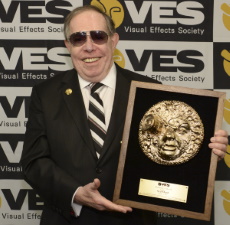
Visual artist and futurist Syd Mead, who helped shape the look of influential sci-fi films including BLADE RUNNER, TRON, ALIENS and STAR TREK: THE MOTION PICTURE, died Monday of complications from lymphoma in Pasadena, California. He was 86.
“Syd was truly a defining creative force in the world of visual arts,” said Mike Chambers, VES Board Chair. “He had a rare ability to create fiercely inventive images, both iconic and sublime, and he contributed to some of our most unforgettable cinematic experiences. Syd’s legendary contributions to the field of design, and the inspiration he has provided for generations of visual effects artists is immense.”
Autoline journalist John McElroy first reported the news, which was confirmed by his spouse Roger Servick to several media outlets.
Mead was set to receive the Art Directors Guild’s William Cameron Menzies Award during the Guild’s 24th Annual awards in February for his contributions on ALIENS, BLADE RUNNER and STAR TREK: THE MOTION PICTURE.
ADG president Nelson Coates said, “I am so saddened to hear of the passing of visionary illustrator and concept artist Syd Mead. His pivotal role in shaping cinema was unique, with a singular ability to visualize the future. As one of the most influential conceptual artists of our time, his visions and illustrations of future technological worlds will remain as a testament to his vast imagination.”
Mead started his design career in the auto, electronics and steel industries working for Ford Motor Co., Sony, U.S. Steel and Phillips Electronics. He then transitioned to film. His career began as a production illustrator working with director Robert Wise (WEST SIDE STORY) to create Earth’s nemesis V’Ger in the 1979 STAR TREK: THE MOTION PICTURE.
He continued fusing technology with creativity, bringing to life some of the biggest films in science fiction. In 1982, he served as a visual futurist on BLADE RUNNER, before collaborating as a conceptual artist with director Steven Lisberger on the 1982 TRON.
He explained his inspiration for BLADE RUNNER to Curbed in 2015, “For a city in 2019, which isn’t that far from now, I used the model of Western cities like New York or Chicago that were laid out after the invention of mass transit and automobiles, with grids and linear transport. I thought, we’re at 2,500 feet now, let’s boost it to 3,000 feet, and then pretend the city has an upper city and lower city. The street level becomes the basement, and decent people just don’t want to go there. In my mind, all the tall buildings have a sky lobby, and nobody goes below the 30th floor, and that’s the way life would be organized,” Mead said.
Mead later designed the Leonov spaceship seen in 2001: A SPACE ODYSSEY sequel 2010 before becoming a robot designer on the family film SHORT CIRCUIT starring Ally Sheedy and Steve Guttenberg. More recently, Mead’s created designs for MISSION: IMPOSSIBLE III, ELYSIUM and TOMORROWLAND and consulted on BLADE RUNNER 2049.
The Visual Effects Society honored Mr. Mead with the Visionary Award at the 14th Annual VES Awards in 2016.
Compiled from VARIETY and other sources.
Gene Warren, Jr.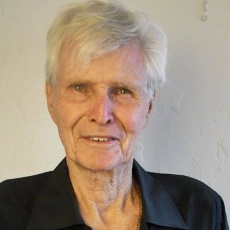
We are sad to note the passing of visual effects supervisor and 22 year VES member Gene Warren Jr., co-founder of Fantasy II Film Effects. Gene received an Academy Award – with Dennis Muren, Stan Winston and Robert Skotak – for his work on TERMINATOR 2: JUDGEMENT DAY. He is also known for his work providing spectacular in-camera illusions for Francis Coppola’s DRACULA, and he shared a VES Award nomination with his son, Gene Warren III, for miniature work on the action thriller THE EXPENDABLES.
Born 1941 in Hollywood, California, to Gene Warren Sr., Oscar winner for 1960’s THE TIME MACHINE, Gene first worked on his father’s productions, including the children’s television series LAND OF THE LOST. In 1980, Gene co-founded Fantasy II with Leslie Huntley and Peter Kleinow. Projects included future war scenes and the tanker detonation in THE TERMINATOR, epic surface craft scenes in THE ABYSS, and the extraordinary suspension bridge collapse for THE MOTHMAN PROPHECIES. Fantasy II’s work for the HBO ATTACK OF THE 50 FOOT WOMAN appeared on the cover of Cinefex 57.
Gene was a passionate political activist, and an adherent of hand-crafted, in-camera practical effects. In recent years, Gene taught an introduction to, and history of pre-digital visual effects at University of Southern California, he wrote several novels, and he developed a talent for karaoke, particularly Roy Orbison.
Cinefex founder Don Shay recalled, “Gene was in Jim Cameron’s inner circle of old-school effects guys who got the job done with excellent work on a minimal budget. I don’t find it at all surprising that even after Jim became successful enough to hire the ILMs of the world to do his bidding, he would still toss a choice bone or two to his old compadres. Good work is good work.”
Compiled from the Cinefex Facebook page.
Patricia Blau
It is with a heavy heart that the VES informs you of the loss of a much loved early member.
Patricia Blau, known to her friends as Patty, peacefully passed away on Tuesday night, September 17 after a long battle with Alzheimer’s Disease. She was 64 years old. Patty worked for ILM for many years, eventually achieving the title of Vice President in Charge of Animation Development.
She was also a prolific award-winning fine artist. She will be dearly missed by all who knew her.
Liza Keith
Liza Keith, longtime VES member, digital effects technical director and shader writer specializing in look development, passed away peacefully on February 16, 2019. As a part of the Los Angeles effects community, she will be deeply missed. Liza was a pioneer from the start of her career, earning her B.S. in Math and Computer Science at UCLA at a time when STEM-oriented degree work was still not pursued by many women. Her career tracked with the exciting growth of the computer graphics community in LA and on the planet. Beginning in 1987, she worked in digital effects, contributing to a wide range of films, animated features, large format motion rides and broadcast television projects.
As a team member or a consultant, she contributed her expertise at many groundbreaking companies including Abel Image Research, Rhythm & Hues, Cinesite (Los Angeles and London), ILM, Digital Domain, Sony Imageworks, Disney Feature Animation and Framestore. Liza was a true Los Angeles native whose projects also took her to London, Paris, India and Canada.
Her technical talent and drive were obvious to all who worked with her. Liza’s contributions were featured in several award-winning films including LIFE OF PI, TRUE LIES, X-MEN 2, and PETER PAN. She counted the iconic TERMINATOR 2: JUDGEMENT DAY among her credits. Her shader writing can be found in HARRY POTTER AND THE PRISONER OF AZKABAN and MEET THE ROBINSONS. Liza’s ability to communicate with both artists and members of technical teams also often made her the ideal person to oversee design and implementation of rendering pipeline between those departments.
Liza was a smart, passionate, pattern breaker well known in the Los Angeles digital effects community. She religiously attended the annual SIGGRAPH Conference. She is remembered as a mentor to the next generation of digital effects experts via her informal “women in digital” meetups. As a RenderMan expert, Liza shared her inspiration, often patiently teaching those with less experience.
As a friend, a colleague, a sister and an aunt, Liza is fondly remembered and will be greatly missed.
 Danny Gordon Taylor
Long-time VES member Danny Gordon Taylor, an animation specialist who earned an Oscar nomination for his efforts on the Hugh Jackman-starring REAL STEEL, has died. He was 69.
Taylor died July 10 in his sleep in Lapeer, Michigan, his friend John Ellis told THE HOLLYWOOD REPORTER. The cause of death was a heart attack.
Taylor worked for Industrial Light & Magic — he did computer graphics for a special edition of the original STAR WARS in 1997 while there — and for Digital Domain and WETA Digital during his career.
His credits as an animator and animation supervisor also included THE MASK (1994), JUMANJI (1995), THE LOST WORLD: JURASSIC PARK (1997), TERMINATOR 3: RISE OF THE MACHINES (2003), TRANSFORMERSs (2007), TRANSFORMERS: REVENGE OF THE FALLEN (2009), THE HOBBIT: BATTLE OF THE FIVE ARMIES (2014), THE JUNGLE BOOK (2016), GUARDIANS OF THE GALAXY, VOL. 2 (2017) and ALITA: BATTLE ANGEL (2019).
Taylor shared his Oscar nom for REAL STEEL (2011) with Erik Nash, John Rosengrant and Swen Gillberg.
Raised in Tonawanda, New York, near Buffalo, Taylor worked for WDCA-TV 20 in Washington before launching Taylor Made Images in Hyattsville, Maryland. At his company from 1983-91, he did traditional animation and VFX work for clients including DuPont, PBS, Sam Raimi, the IRS and the U.S. Armed Forces, as well as a feature film, Metamorphosis: THE ALIAN FACTOR (1990).
“Dan was brilliant,” Ellis said, “and he told me recently that he missed those days of rubber bands and bailing wire effects.”
Survivors include his wife, Sandy; daughters Molly and Melissa; son MJ; and sister Loretta.
Compiled from THE HOLLYWOOD REPORTER.
John Swallow
 Producer and Visual Effects Supervisor John Swallow has passed away at 65. He was a member of the Society for more than two decades, and will be missed by all who knew him.
A straightforward man with a generous spirit and a gift for making friends, John Swallow pursued artistic expression throughout his life, from his work on a wide range of Hollywood films to his bluesy rock ‘n’ roll music and vivid nature photography.
After receiving a bachelor’s in Design and Photography from California State University, Long Beach, John worked for Apogee Productions, rising to Vice President of Production. There and elsewhere, he pioneered cutting-edge special effects technologies, leaving Apogee to become Executive Producer at Pacific Data Images, where his feature film work included effects for NATURAL BORN KILLERS, CARLITO’S WAY, TOYS, LORENZO’S OIL, TWIN PEAKS, GREMLINS 2, DIE HARD 2 and THE NATURAL. John was also the Effects Producer for the film DRAGONHEART.
He then became Executive Vice President of Production Technology at Universal Studios with the following titles released during his tenure: the BOURNE series, KING KONG, FAST AND FURIOUS 1 & 2, THE INCREDIBLE HULK, JURASSIC PARK 2 & 3, the MUMMY series, HOW THE GRINCH STOLE CHRISTMAS, THE TALE OF DESPEREAUX, the NUTTY PROFESSOR movies, GLADIATOR and more.
John also worked as an independent producer with projects all over the world, which included CABIN IN THE WOODS, HELLBOY II: THE GOLDEN ARMY, CIRQUE DU FREAK, LAND OF THE LOST, RED DAWN, and SINCITY: A DAME TO KILL FOR. He was the VFX Supervisor on the Netflix projects GODLESS and THE HIGHWAYMEN. John was a member of the Producers Guild, the Visual Effects Society, and the Academy of Motion Picture Arts and Sciences Visual Effects Branch.
John developed his intense love of nature on family camping and fishing trips. While still in high school, he volunteered for the Mountain Lion Foundation to save cougars from extinction and worked with the American Cetacean Society to educate people about the plight of the California Gray Whale. Before his career in film, he trained and handled big cats, primates, and elephants for Marine World, Africa U.S.A. John also helped produce The Ocean Symphony, a series of PSAs for Ocean Conservancy. For several years, John served on the boards of two conservation groups, Vital Ground Foundation and The Cougar Fund. He was also an adviser and pro bono photographer for Wildlife Land Trust, the conservation arm of The Humane Society.
Two converging themes of John’s life – art and nature – found expression in his music and his wildlife photography. John had two solo photography shows and participated in group shows in the Los Angeles area. As a member of Hurricane Inside, he pursued a lifelong love of music, producing two albums with his band and performing at the SXSW Music Festival. John E. Swallow died at home in Los Angeles. He was planning another trip to Alaska to photograph wildlife, among other creative projects.
 Thilo Ewers
VES member Thilo Ewers (1981-2018), colleague, friend, husband and father of three was taken away from his loved ones and the work he loved way too early. Known for his work on LIVE BY NIGHT, FAST… read more
 George Jenson
Academy Award-nominated art director, production illustrator and visual effects artist George Jenson died on May 25 at the age of 87. He was the production illustrator on RETURN OF THE JEDI, and received an Oscar nomination for visual effects for his work on 2010. Jenson began his film career in 1964 as a production illustrator/storyboard artist at 20th Century Fox Studios, working for producer Irwin Allen’s series LOST IN SPACE, VOYAGE TO THE BOTTOM OF THE SEA, TIME TUNNEL and LAND OF THE GIANTS. He moved to Filmation Associates as a layout artist and illustrator on the animated TV series STAR TREK, MISSION MAGIC, LASSIE’S RESCUE RANGERS and MY FAVORITE MARTIAN from 1972 to ’75. Jenson… read more
 Virgil Mirano
Virgil Mirano, a VES member for more than 20 years, passed away in January of 2018. From the mid-1970’s through the 1990’s, Virgil manned the stills photo lab of three of the large VFX houses in L.A. – first with Robert Abel… read more
 Arnold Kunert
Arnold Kunert was a long-time VES member and a remarkable human being, a dedicated fan, film historian and cinematic biographer of Ray Harryhausen, the single greatest stop motion animation genius in film history. Arnold campaigned for his friend and associate to receive an honorary Academy Award in 1992 as well as his star on the Hollywood Walk of Fame in 2003. He produced the Saturn Award-winning documentary RAY HARRYHAUSEN: THE EARLY YEARS as well as DAWS BUTLER: VOICE MAGICIAN and BUDD BOETTICHER: ONE ON ONE as well as the “Ray Harryhausen Presents” animated short THE PIT AND THE PENDULUM. Arnold passed away on March 14th. His artistry, friendship, and affection for the genre that we all love so deeply will never be forgotten. He is survived by his wife Marlene.
 Stan Lee
Stan Lee, the legendary writer, editor and publisher of Marvel Comics whose fantabulous but flawed creations made him a real-life superhero to comic book lovers everywhere, has died. He was 95. Lee, who began in the business in 1939 and created or co-created Black Panther, Spider-Man, the X-Men, the Mighty Thor, Iron Man, the Fantastic Four, the Incredible Hulk, Daredevil and Ant-Man, among countless other characters, died early Monday morning at Cedars-Sinai Medical Center in Los Angeles, a family representative told The Hollywood Reporter. Kirk Schenck, an attorney for Lee’s daughter, J.C. Lee, also confirmed his death to the Associated Press. Lee’s final few years were tumultuous. After… read more
 Will Vinton
Will Vinton, the Oscar-winning visionary with the distinctive waxed mustache who coined the term “Claymation” and founded the studio that created the California Raisins, has died at 70. His family wrote, “His work will live on in animation history and will continue to inspire creative thinkers and makers.” The Oregon native saw himself as a filmmaker first and an animator second. With an eye for movement and design, he was a natural when it came to editing and camera work as well. From his humble beginnings as a former architectural student, he became the epicenter for the animation and filmmaking community in the Pacific Northwest. Vinton won his Oscar in 1975 for the animated short film… read more
 Terry Windell
Director, Visual Effects and Animation Supervisor Terry Windell passed away on July 21 at the age of 61. He directed many award-winning commercials as well as several episodes of STAR TREK: VOYAGER and ENTERPRISE. While working as a background artist on HEAVY METAL, he was hired by ILM where he worked on POLTERGEIST and E,T,: THE EXTRATERRESTRIAL. He met Richard Edlund, VES while at ILM and worked on RETUIRN OF THE JEDI, GHOSTBUSTERS , FRIGHT NIGHT and 2010. When Edlund left to found Boss Films, Windell followed. In 1989, Windell made his directorial debut with an impressive four spot effects-laden campaign for DHL, which garnered numerous honors including a Silver Clio and a New York Film… read more
 Jeff Heuser
Veteran VES member, Emmy winner and co-founder of fxguide, Jeff Heusser, passed away in July. He was a caring husband, brother, uncle and friend to many. To the very end, Jeff was funny, kind, and caring for and about others more than himself. We celebrate his life, his selflessness, and the impact he had on all of us who knew him and those who he touched all around the world. Jeff started in the industry at public television station WCET in Cincinnati, Ohio where he worked in almost every production job before moving up to producing and directing. His next stop was WLWT where he directed the news and other live and taped shows. He also won several Emmys for his work there. He then got into… read more
 Claudia Sumner
Long-time VES member and former Co-Chair of the VES Awards Committee passed away on Sunday, March 19th at City of Hope in Los Angeles after a decades long battle with cancer. She fought bravely to the very end with courage that belied her diminutive size. She worked in the visual effects industry since the early 1980s, always putting in the long hours because she loved her work so much, and was fortunate to be a part of the VES and a former Chair of the L.A. ACM SIGGRAPH chapter, to both of which she enjoyed giving her time and energy.Throughout her career, she contributed to such innovative projects as THE LAST STARFIGHTER, STAR TREK: VOYAGER, DAYBREAK, BEND IT LIKE BECKHAM and CITY OF GHOSTS.
Everyone who knew her is invited to attend her funeral on Tuesday, March 28th at 3:00PM at Forest Lawn Hollywood Hills.
 Steve Moore
Longtime VES member Steve Moore passed away last week at age 69. He was a Visual Effects Editor and Supervisor who joined the Society in 1998. By that time, he had already worked on such projects as WILLOW, GHOSTBUSTERS II, MORTAL KOMBAT, THE ARRIVAL and TITANIC. His more recent work included X-MEN, PLANET OF THE APES, X-MEN 2, SEABISCUIT, CLOVERFIELD, AVATAR, THE GREAT GATSBY and many more. He is survived by his twin daughters Samantha Ray and Alyssa Moore. He will be missed by all who knew him.
 Peter Webb
Long-time VES member and Visual Effects Supervisor Peter Webb passed away after a long illness. Peter was the world’s first Flame artist, and was involved in early development of that software. His television and feature credits include STAR TREK: THE NEXT GENERATION, SUPER MARIO BROS., BATMAN FOREVER, ROMEO + JULIET, CHARLOTTE’S WEB, AUSTRALIA, THE PACIFIC and THE WOLVERINE. He worked at Iloura for 16 years, and was a dedicated and loving father and husband who will be missed.
 Ron Thornton
Visual Effects pioneer Ron Thornton has died Nov 21st at his home in Albuquerque, New Mexico, after a short illness. He was 59. Thornton, a native of London, England, began his entertainment career working for the BBC, creating props and miniatures for shows such as “Dr. Who,” and “Blakes 7.” In 1984, Thornton emigrated to the United States where he went on to shoot and create miniatures for films such as “Real Genius”, “Commando”, “Space Balls,” “Critters”, and “Robot Jox.” In 1987 he began to experiment with consumer level computer hardware to create 3-D computer graphics for pre-visualizing FX shots. It was mid-1991 when Thornton was approached by the producers of a sci-fi project in… read more
 Andrea Losch
Andrea Losch, R.I.P. Andrea Losch passed away on April 25, 2016 at age 58. She worked as a visual effects Technical Director for more than 20 years, and was a VES member for over a decade. Throughout the course of her career, she worked at Industrial Light… read more
 Gary Hutzel
Long-time VES member Gary Hutzel passed away at 61. He was the winner of 4 Prime-time Emmys for his work on STAR TREK: THE NEXT GENERATION, STAR TREK: DEEP SPACE NINE and BATTLESTAR GALACTICA going as far back as 1992, and he also won 6 VES Awards for his work on BATTLESTAR GALACTICA and CAPRICA. VES member Doug Drexler called Gary, “One of the greatest creative minds I’ve ever worked with. A wizard that made the impossible possible on a television budget.” “Gary set up an environment that was more like a band of brothers and sisters. A club house where everyone was a creative equal. Everyone was a filmmaker first, and a VFX artist second. He often said that you could not defeat a good idea… read more
 Kenneth Kramer
October 6, 1943 – March 18, 2016 Ken L. Kramer, film preservationist and historian, passed away peacefully at home in Los Angeles (Sylmar) at the age of 72. He leaves behind his loving companion and wife of 37 years, Kathy (Losso), son Jayson, grandchildren Kyle, Austin… read more
 Kit West
Long time VES member, Oscar and BAFTA winning Special Effects artist Kit West passed away. The mechanical special effects ace behind such films as RAIDERS OF THE LOST ARK, for which he won an Academy Award, and STAR WARS: EPISODE VI — RETURN OF THE JEDI has died. He was 80. West, who also received Oscar nominations for his work on YOUNG SHERLOCK HOLMES (1985) and DRAGONHEART (1996), died Saturday at his home in London, a representative from the Berlin Associates agency told The Hollywood Reporter. West was responsible for the “old school” mechanical effects on RAIDERS OF THE LOST ARK (1981) and RETURN OF THE JEDI (1983). On the latter, he oversaw all the robots, including the radio-… read more
 Bill Coffin
Long-time VES member and Visual Effects Supervisor Bill Coffin passed away in his sleep on September 3, 2016 at the age of 66. Bill was a first-rate Flame artist. He has worked on many feature films, D.I.’s, film and TV trailers, television shows, commercials, music videos, and made-for-TV movies. Bill’s feature film projects, include SPIDER-MAN, SIN CITY, X-MEN, MORTAL KOMBAT, SEABISCUIT. His commercial credits include brands such as Honda, Coca-Cola, Mercedes-Benz, Ford and Verizon, and music videos for several top recording artists such as Faith Hill, Big… read more
 Francis L. Camacho
(from CG Society) Francis L. Camacho worked as the Matchmove Supervisor for Prime Focus World in Mumbai, India where he was reponsible for the feature film matchmove team, quality control and matchmove training for the studio’s artists. previously he has worked for studios such as Uncharted Territory , Scanline LA, Digital Domain, Rhythm and Hues, Sony Imageworks, and Hammerhead Productions. He has worked on feature films including Prometheus, 2012, Iron Man3, The Amazing Spiderman, Tron:Legacy, The Curious Case of Benjamin Button, and both Journey3 movies. Francis was highly experienced in camera tracking and matchmoving, roto-animation, and stereoscopic 3D tracking. He also worked as a… read more
 Damir Frkovic
Damir Frkovic, R.I.P. Damir Frkovic was a commercial imaging artist, photographer and visual designer. He was a VES member for more than a decade, and worked as a modeling and lighting artist on several features for Pixar Animation Studios, including TOY STORY, A BUG’S LIFE, TOY STORY 2, MONSTERS INC. and FINDING NEMO. Born in Croatia, raised and schooled in Canada, he traveled and worked all over the world on many creative projects for many clients and companies, including Pixar and Apple Inc. He passed away suddenly in March of this year, and is survived by his partner of 13 years, Shawnae Lorenz. Damir will be missed within the visual effects community.
 Howard A. Anderson, Jr., ASC
Howard A. Anderson, Jr., ASC – RIP We are sad to announce the death of long-time VES member, Howard A. Anderson Jr., ASC. He was born on March 31, 1920 and had been a member of the ASC since 1962. He received the Lifetime Achievement Award at the 59th Primetime Emmy Awards in 2007, and he won the coveted President’s Award from the American Society of Cinematographers in 2004. He was nominated for the Best Special Visual Effects Oscar for his work on TOBRUK (1967) along with Albert Whitlock at the 40th Annual Academy Awards. He also did the VFX for the original 1960s STAR TREK series. He passed away on September 27, 2015, and is survived by 3 children, 12 grandchildren and 16 great… read more
 Lucinda Strub
Lucinda Strub, R.I.P. Lucinda Strub worked in practical special special effects for 30 years, was a long time VES member and winner of the Technical Achievement award at the 59th Academy Awards which she shared with her husband Matt Sweeney. She did special effects for THE GOONIES, THE LOST BOYS, the LETHAL WEAPON franchise, NATURAL BORN KILLERS, APOLLO 13, GALAXY QUEST, the FAST… read more
 Petro Vlahos
Special effects inventor and engineer Petro Vlahos, whose industry contributions made possible such iconic film moments as Julie Andrews dancing with penguins in the 1964 classic MARY POPPINS, died Sunday. He was 96… read more
 Tim Hey
Tim Hey was a true Man of Film. A lifelong lover of the medium, he began his long road as a projectionist at Odeon Cinemas, Ipswich in his native England. Displaying other’s work wasn’t enough to satisfy that love. Inspired by some of his favourite films and film makers, most notably Superman and Steven Spielberg, Tim wanted to be involved in the making. He took a risk, left a good job and enrolled at The Finishing School in London. With a year of training under his belt Tim began working as a Digital Paint Artist at Framestore-CFC on films such as Harry Potter and the Chamber of Secrets and the James Bond film, Die Another Day. Tim proved to be an inspiration to his brother Jeremy, who… read more
 Ray Harryhausen
Visual effects master Ray Harryhausen, whose stop-motion wizardry graced such films as JASON AND THE ARGONAUTS and CLASH OF THE TITANS, has died aged 92. The American animator made his models by hand and painstakingly shot them frame by frame to create some of the best-known battle sequences in cinema. His death was confirmed to the BBC by a representative of the family. “Harryhausen’s genius was in being able to bring his models alive,” said an official statement from his foundation. “Whether they were prehistoric dinosaurs or mythological creatures, in Ray’s hands they were no longer puppets but became instead characters in their own right.” Born in Los Angeles in June 1920, Raymond… read more
 Matthew Yuricich
The visual effects community lost a great matte painter on Sunday. Born on January 19, 1923 in Lorain, Ohio Matthew’s first job after serving in the Navy was for Metro-Goldwyn-Mayer Studios in January 1954. Much of his early studio work went uncredited but included many classic film’s like FORBIDDEN PLANET(1956), NORTH BY NORTHWEST and BEN HUR (both 1959). In 1976 he received an Academy Special Achievement Award for LOGAN’S RUN and was nominated on CLOSE ENCOUNTEERS OF THE THIRD KIND in 1977. His outstanding work spanned nearly 40 years into the 1990s, and included such films as SOYLENT GREEN (1973), THE CHINA SYNDROME (1979), BLADE RUNNER (1982), GHOSTBUSTERS (1984) and DANCES WITH WOLVES… read more
 Eileen Moran
Compiled from various sources Long time VES member and Visual Effects Producer Eileen Moran died Monday in New Zealand after battling cancer. Over her brilliant career she won three VES Awards and an Oscar. Her films included FIGHT CLUB, THE LORD OF THE RINGS Trilogy, KING KONG, AVATAR, THE ADVENTURES OF TINTIN, RISE OF THE PLANET OF THE APES, PROMETHEUS and THE HOBBIT: AN UNEXPECTED JOURNEY among many others. She was too ill last week to attend the New Zealand world premiere of THE HOBBIT: AN UNEXPECTED JOURNEY, one of the last movies she worked on. Director Peter Jackson said, “She was a lovely, decent person who had great respect for all the artists she worked with.” “Eileen was an… read more
From HollywoodNews.com Among his recent credits are Charlie St. Cloud, Hot Tub Time Machine, The Uninvited, Vantage Point and the mini-series “Impact.” Hodgson had just begun work on Starz’ “Camelot,” the upcoming series focusing on the King Arthur legend, when he died. Hodgson was nominated for a Gemini Award – Canada’s highest honors for work in TV – in 2009 for his effects efforts on “Impact,” and in 2004 for “The Collector.” His effects work on“Impact” earned him a Leo Award – celebrating film and TV productions from British Columbia – and “The Collector” netted him a Leo Award nomination. Born Oct. 6, 1959 in Bellshill, Scotland, Hodgson was based in Vancouver. He is survived by his… read more
 Sande Scoredos
The Society and computer graphics community lost a great champion this past weekend; Sande Scoredos passed away Saturday morning after a prolonged illness. Sande, who served as Executive Director of Training and Artist Development At Sony Pictures Imageworks for the past 12-plus years, was a founding member of the VES, coming on-board within the first year of the Society’s existence. Right from the beginning, Sande was an active member of the Education Committee, serving several years as Co-Chair. During her tenure, the Committee produced many valuable events, presentations and hands-on trainings for members. She was also a guiding light in the first years of the Training and Mentoring… read more